
Samsung Confirms Next-Gen S Pen: The Future of the Galaxy Ultra Stylus Revealed
Recent changes to Samsung’s iconic stylus have left many enthusiasts questioning the future of the S Pen. Following the removal of Bluetooth functionality in the Galaxy S25 Ultra and its continued absence in the latest Galaxy S26 Ultra, rumors began to circulate that the tool might be phased out entirely. However, Samsung has officially broken its silence, confirming that not only is the S Pen here to stay, but it is also undergoing a major technological transformation to overcome current hardware limitations.
- ✨ Samsung officially confirms that the S Pen remains a "core technology" for the Galaxy Ultra lineup.
- ✨ A new version of the S Pen is currently in development, featuring a more advanced internal structure.
- ✨ The company is designing a new display architecture to reduce the physical "penalty" of housing a stylus.
- ✨ Future models may adopt the USI 2.0 standard to enable features like NFC wireless charging and better magnetic compatibility.
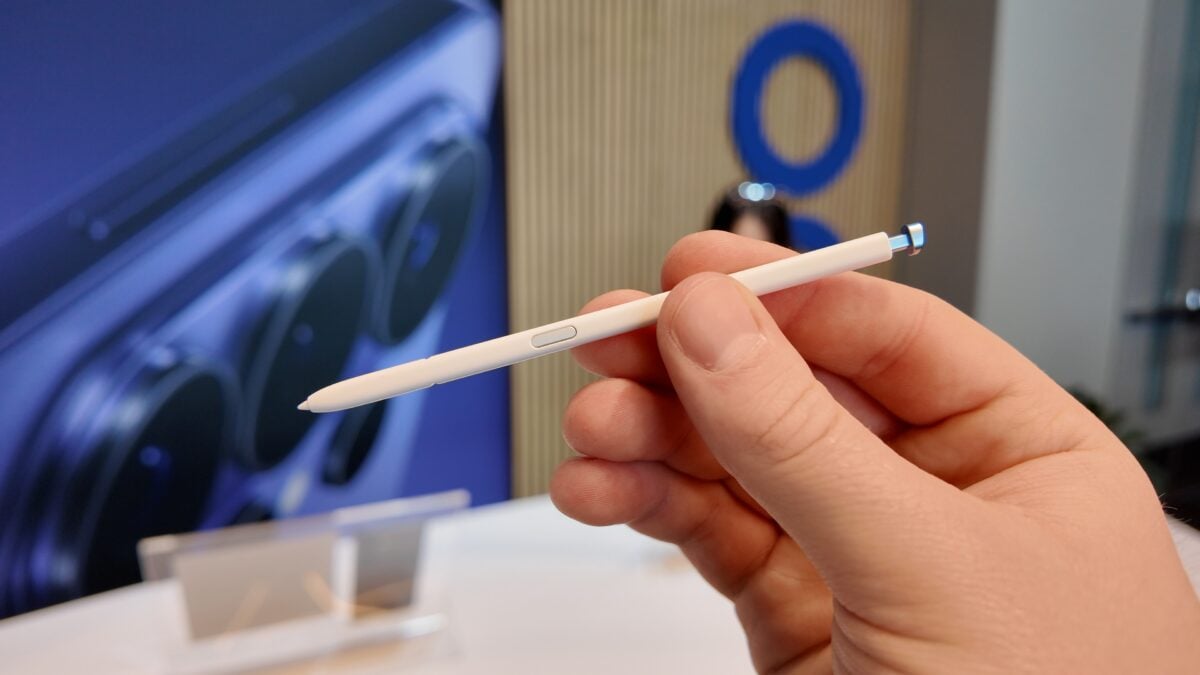
New Display Architectures and Advanced Stylus Technology
In a revealing discussion with Bloomberg, Won-Joon Choi, the Chief Operating Officer of Samsung MX, provided clarity on the company's roadmap. He acknowledged the hardware challenges that led to recent design compromises and emphasized that Samsung is engineering a "new structure of display." This innovation aims to minimize the spatial trade-offs required to include an internal S Pen, potentially allowing for larger batteries or thinner device profiles without sacrificing the S Pen features users love.
Choi stated: "We’re working on a more advanced technology within S Pen to come up with a new structure of display, so the penalty of having S Pen is diminished. S Pen will continue to be one of the core technologies."
The Potential Shift to USI 2.0 and Qi2 Compatibility
One of the most significant hurdles for the modern Samsung MX design team has been the interference between the S Pen's digitizer and the magnets required for Qi2 wireless charging. By potentially adopting the USI 2.0 (Universal Stylus Initiative) standard, Samsung could solve this conflict. USI 2.0 styluses are designed to work with in-cell display panels and support advanced features such as:
- ✨ Support for over 16 million colors in digital palettes.
- ✨ Up to 4,096 levels of pressure sensitivity for professional-grade sketching.
- ✨ Tilt functionality for natural writing angles.
- ✨ Wireless charging via NFC, which could replace the need for traditional Bluetooth capacitors.
Is Samsung planning to discontinue the S Pen in future Ultra models?
No. Samsung’s COO has explicitly confirmed that the S Pen is a core technology and that the company is actively developing a more advanced version to be integrated into future display structures.
Why did the Galaxy S25 and S26 Ultra remove Bluetooth features from the S Pen?
While Samsung hasn't provided a single official reason, it is widely believed to be a result of hardware constraints and interference issues with new magnetic charging standards like Qi2. The "penalty" of housing the stylus is something Samsung is currently working to solve through new display tech.
What is USI 2.0 and how will it help the S Pen?
USI 2.0 is a universal stylus standard that supports in-cell OLED panels and NFC wireless charging. Adopting this could allow Samsung to bring back advanced features without the interference issues caused by traditional Bluetooth and digitizer setups.
Will the new S Pen technology allow for thinner phones?
Samsung is working on a new display structure specifically to reduce the "penalty" of the S Pen. This suggests they want to make the stylus integration more efficient, which could lead to better battery life or more compact device designs in the future.
🔎 In conclusion, while the recent removal of Bluetooth features felt like a step backward for power users, Samsung’s confirmation of an improved S Pen in development is a promising sign. The transition to a new display architecture and potentially the USI 2.0 standard suggests that the next generation of Galaxy Ultra devices will not only retain the stylus but will offer a more seamless and technologically superior experience that balances productivity with modern hardware demands.
Post a Comment