
Beyond Smartphones: Exploring Samsung’s Futuristic OLED Innovations at MWC 2026
Samsung has fundamentally transformed the mobile display landscape since the introduction of Super AMOLED technology on the original Galaxy S. In the years following that debut, the tech giant has aggressively integrated OLED panels across its entire ecosystem. Today, from flagship smartphones and high-performance tablets to the latest smartwatches and premium TVs, Samsung Display remains the primary architect of the world's most vibrant visual experiences.
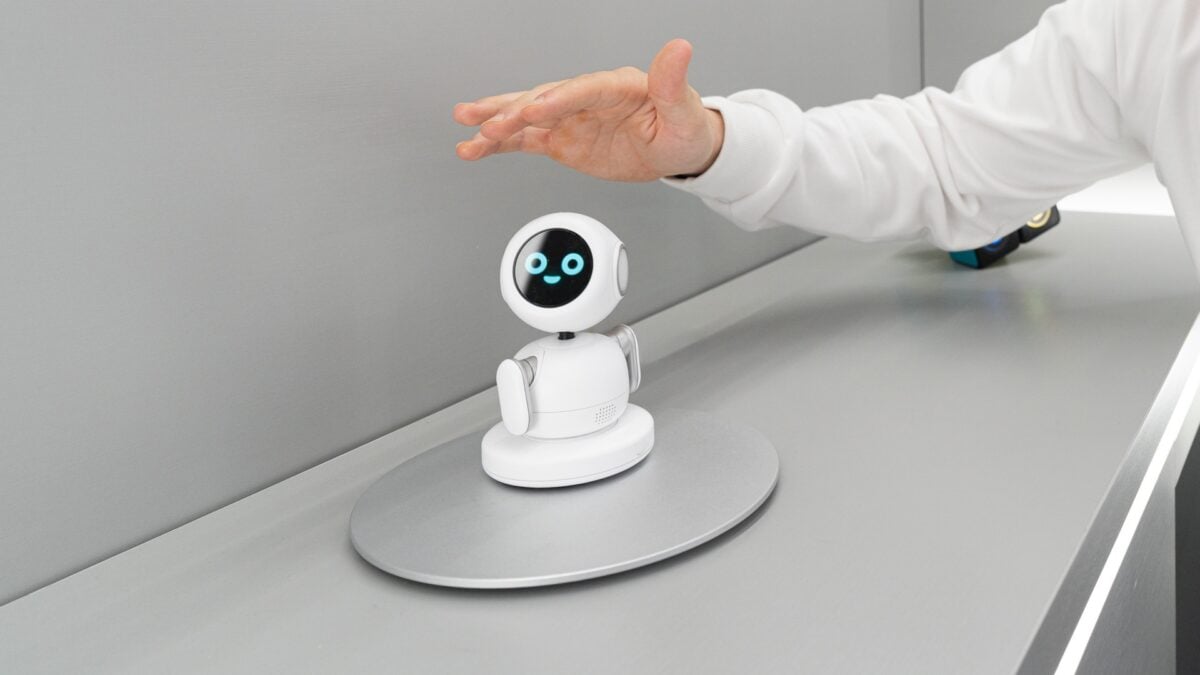
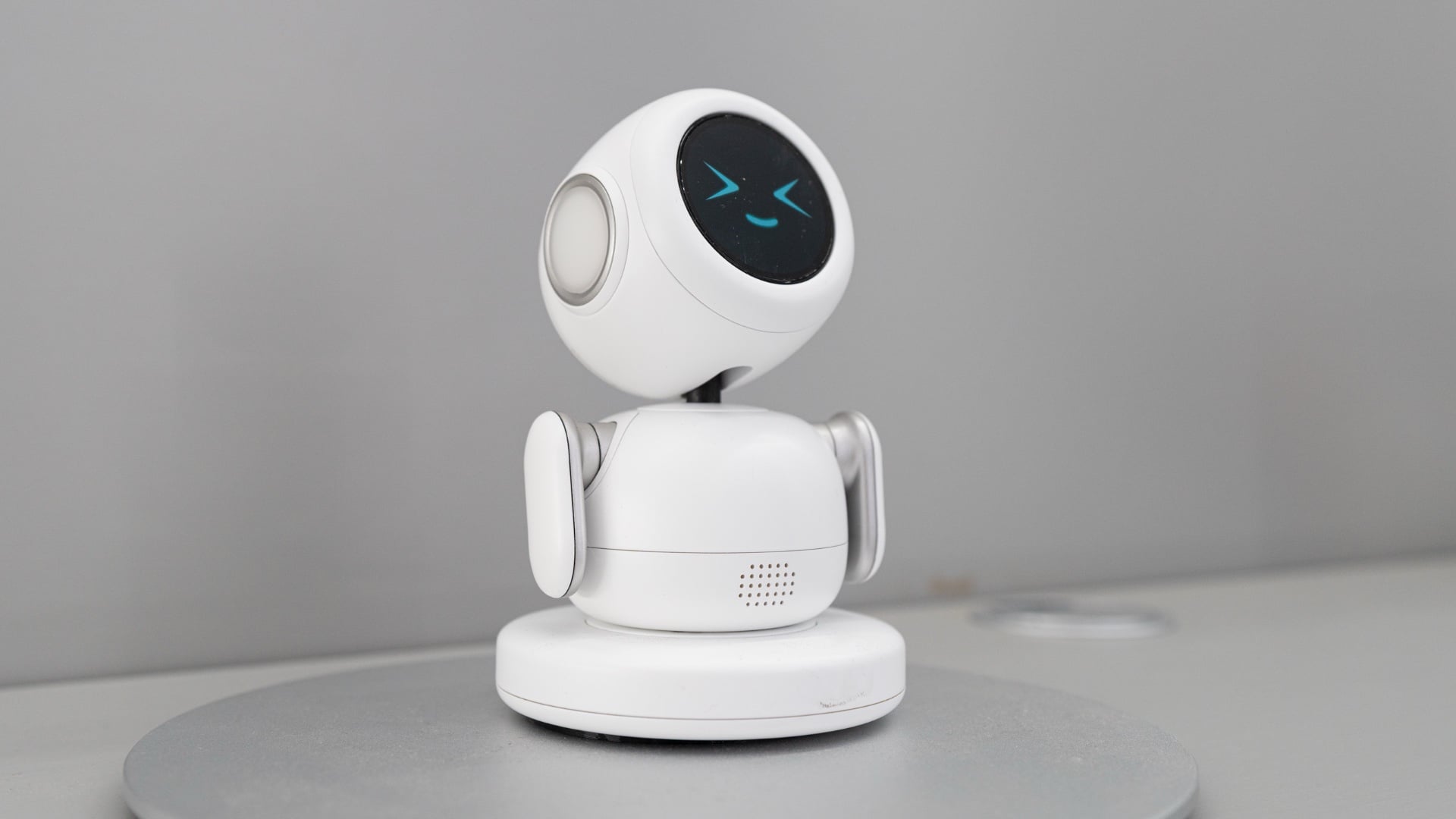
- ✨ **Innovative AI Integration:** Discovery of the Mini PetBot AI, featuring an interactive OLED face for animated emotional responses.
- ✨ **Privacy Revolution:** The debut of Flex Magic Pixel technology, designed to secure on-screen content for the Galaxy S26 Ultra.
- ✨ **Next-Gen Reality:** High-density OLEDoS panels boasting 5,000 ppi for an unparalleled immersive experience in the Galaxy XR.
- ✨ **Architectural Displays:** The "Bezel-less OLED Wall" concept that merges multiple panels into a seamless, artistic mosaic.
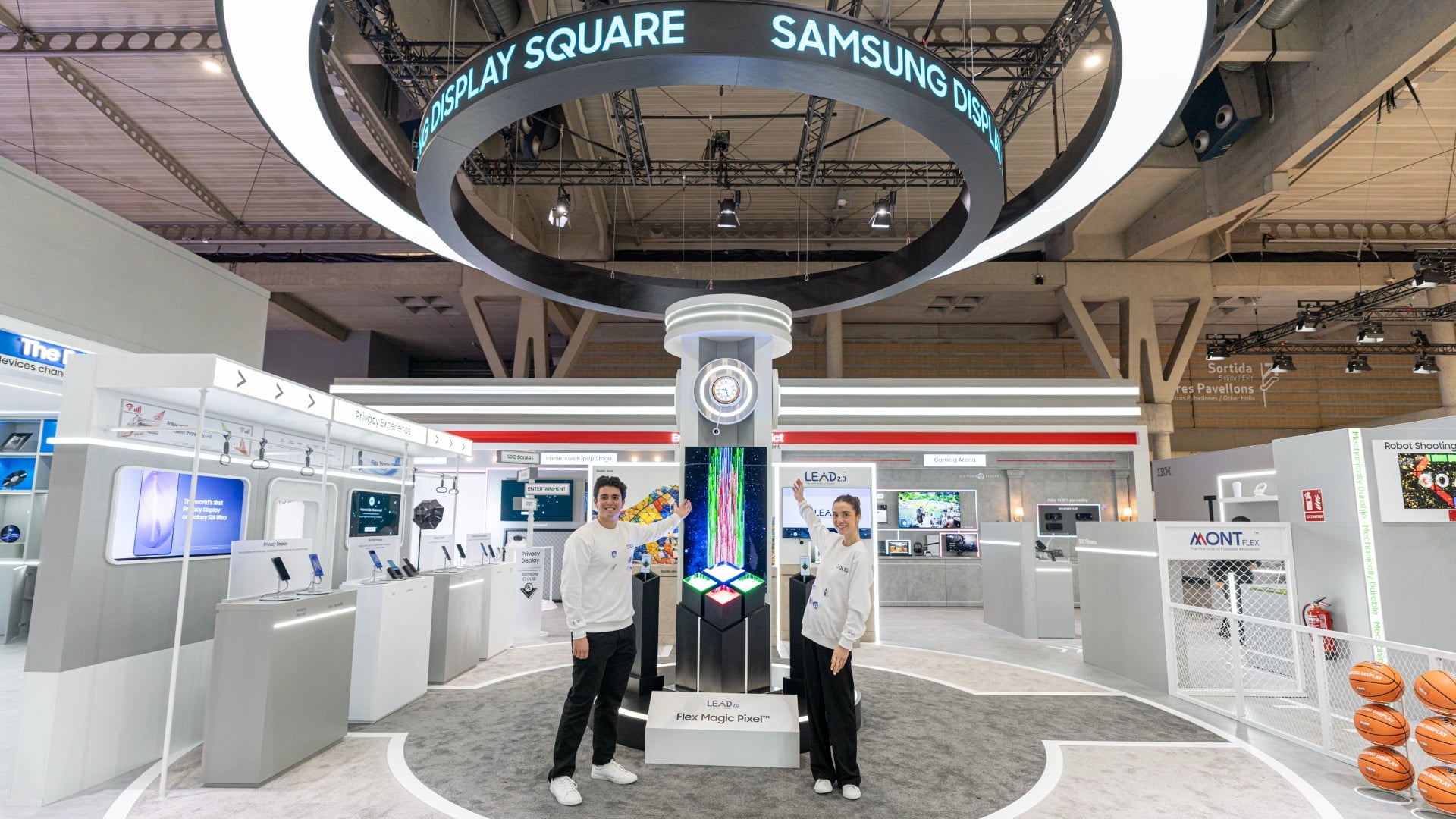
The company’s vision now extends far beyond the palm of your hand. Samsung aims to embed OLED technology into the very fabric of our daily lives—in our vehicles, homes, and workspaces. To demonstrate this ambitious trajectory, Samsung showcased a series of groundbreaking concept products at their dedicated booth during Mobile World Congress (MWC) 2026 in Barcelona.
The Rise of Interactive AI: Mini PetBot and the Toyhouse
Among the most captivating displays was the Mini PetBot AI. This diminutive robot serves as a testament to the versatility of small-form-factor screens, utilizing a 1.34-inch circular OLED display to project a variety of animated facial expressions. The robot is designed to be highly interactive, utilizing sensors to respond to voice commands and physical touch with shifting "emotions" reflected on its vibrant screen.
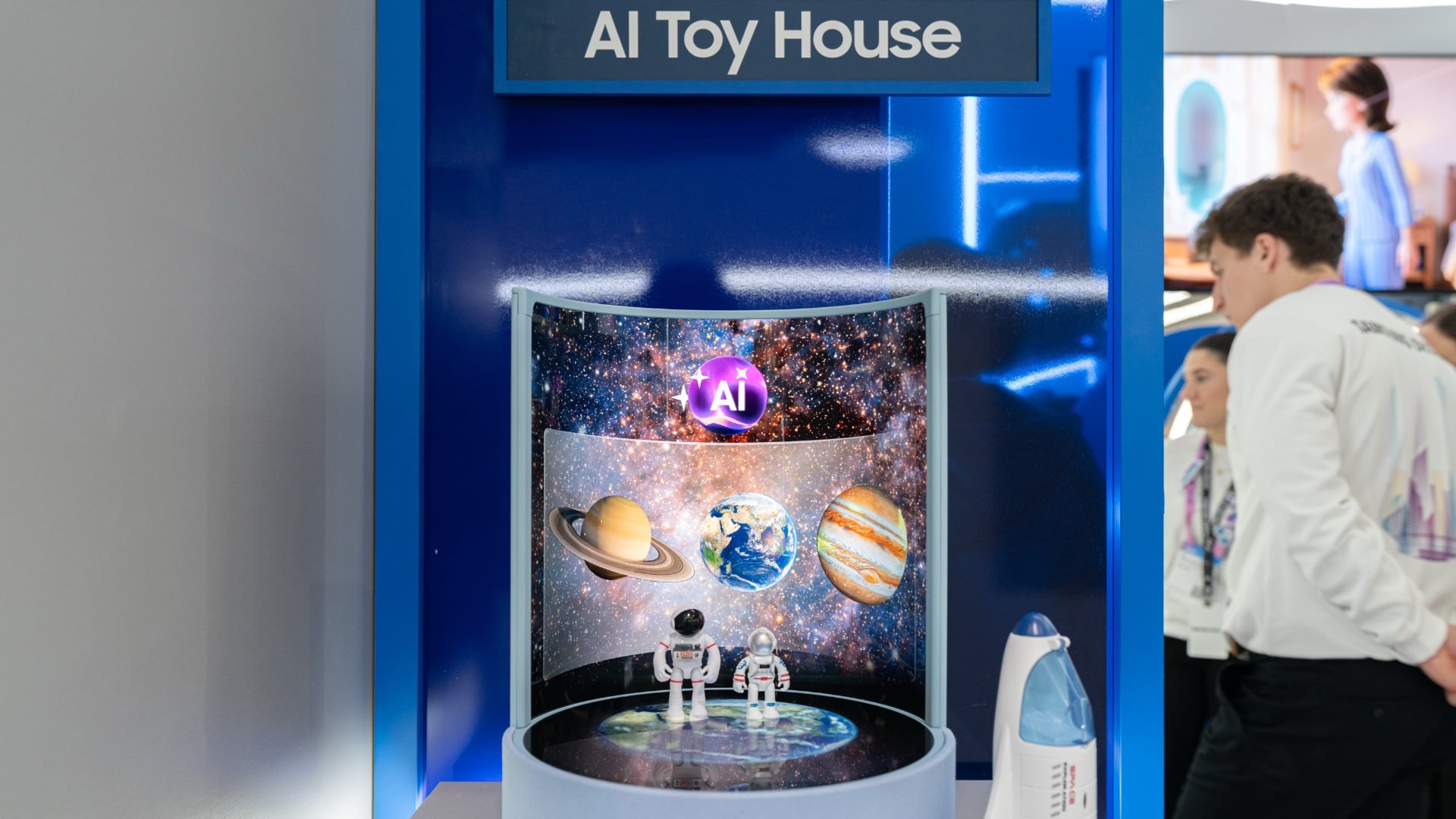
Complementing the robot was the AI Toyhouse concept. This installation paired a 13.4-inch circular OLED screen with a massive 18.1-inch flexible OLED panel. The flexible screen is capable of bending and folding to wrap around physical objects, creating a futuristic, high-tech display case perfect for showcasing premium collectibles or luxury items within a modern home environment.
Next-Generation Privacy for the Galaxy S26 Ultra
Privacy remains a top priority for mobile users, and Samsung Display addressed this with the LEAD 2.0 OLED panel. This screen integrates Flex Magic Pixel (FMP) technology, the same hardware powering the highly anticipated Galaxy S26 Ultra. The FMP technology enables a specialized "Privacy Display" mode that significantly narrows viewing angles, ensuring that sensitive on-screen content remains invisible to anyone standing beside the user.
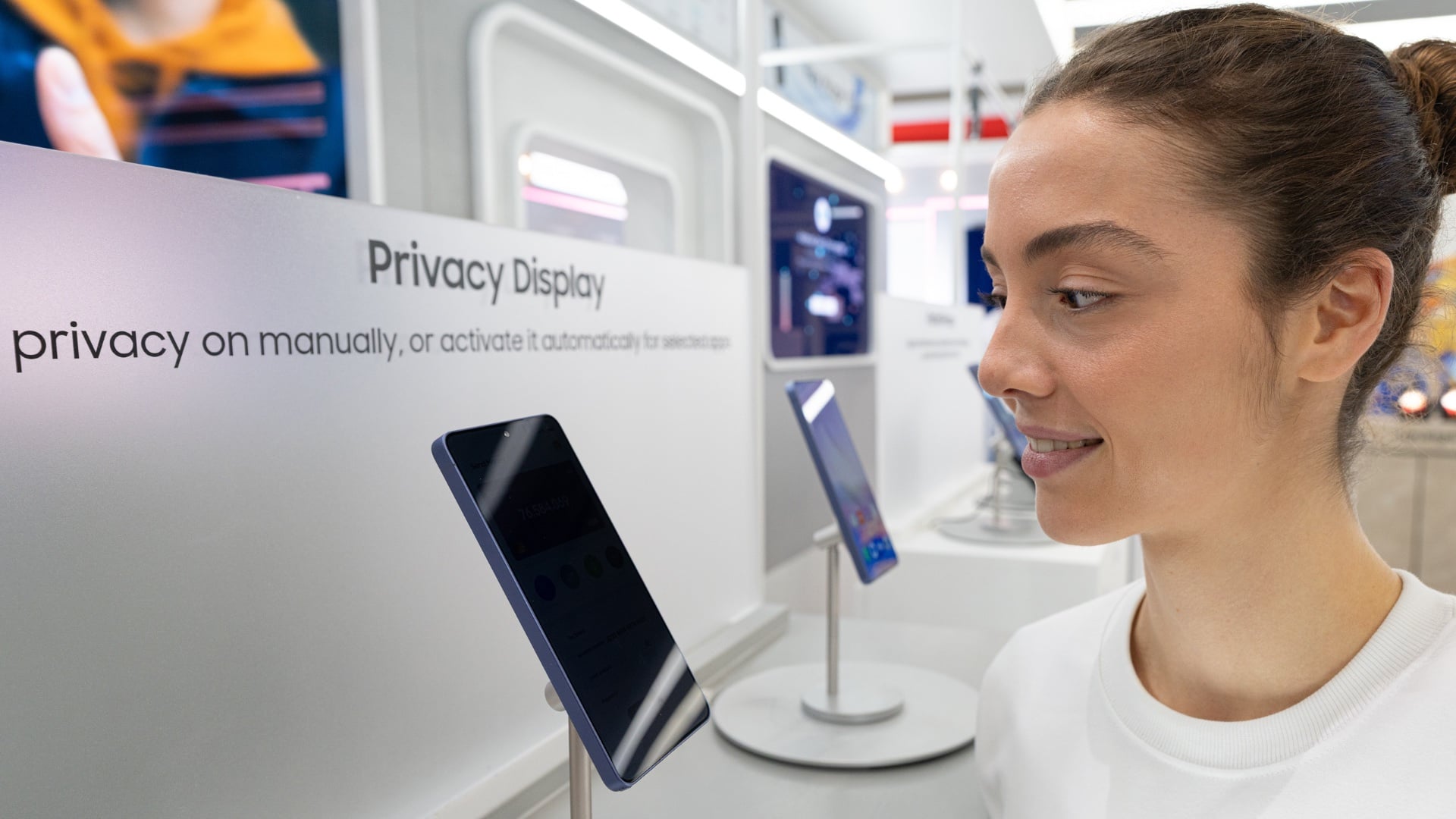
While the core concept was teased previously, the LEAD 2.0 iteration brings substantial improvements. Samsung has successfully boosted peak brightness levels and enhanced power efficiency, proving that users don't have to sacrifice battery life or outdoor visibility for advanced security features.
Galaxy XR and the Power of OLEDoS
The future of mixed reality was also on full display with the introduction of RGB OLED on Silicon (OLEDoS) panels. Specifically engineered for headsets like the upcoming Galaxy XR, these panels utilize microscopic pixels to achieve a staggering density of 5,000 pixels per inch (ppi). This is roughly ten times the density found in a standard high-end smartphone, virtually eliminating the "screen door effect" and providing crystal-clear immersive visuals.
At the MWC booth, visitors were treated to an interactive AI experience where their photos were transformed into personalized K-pop style avatars. These avatars were then synchronized across a multi-device ecosystem, appearing on laptops, smartphones, and even a massive 77-inch QD-OLED TV, demonstrating how seamlessly Samsung's display tech can unify different hardware categories.
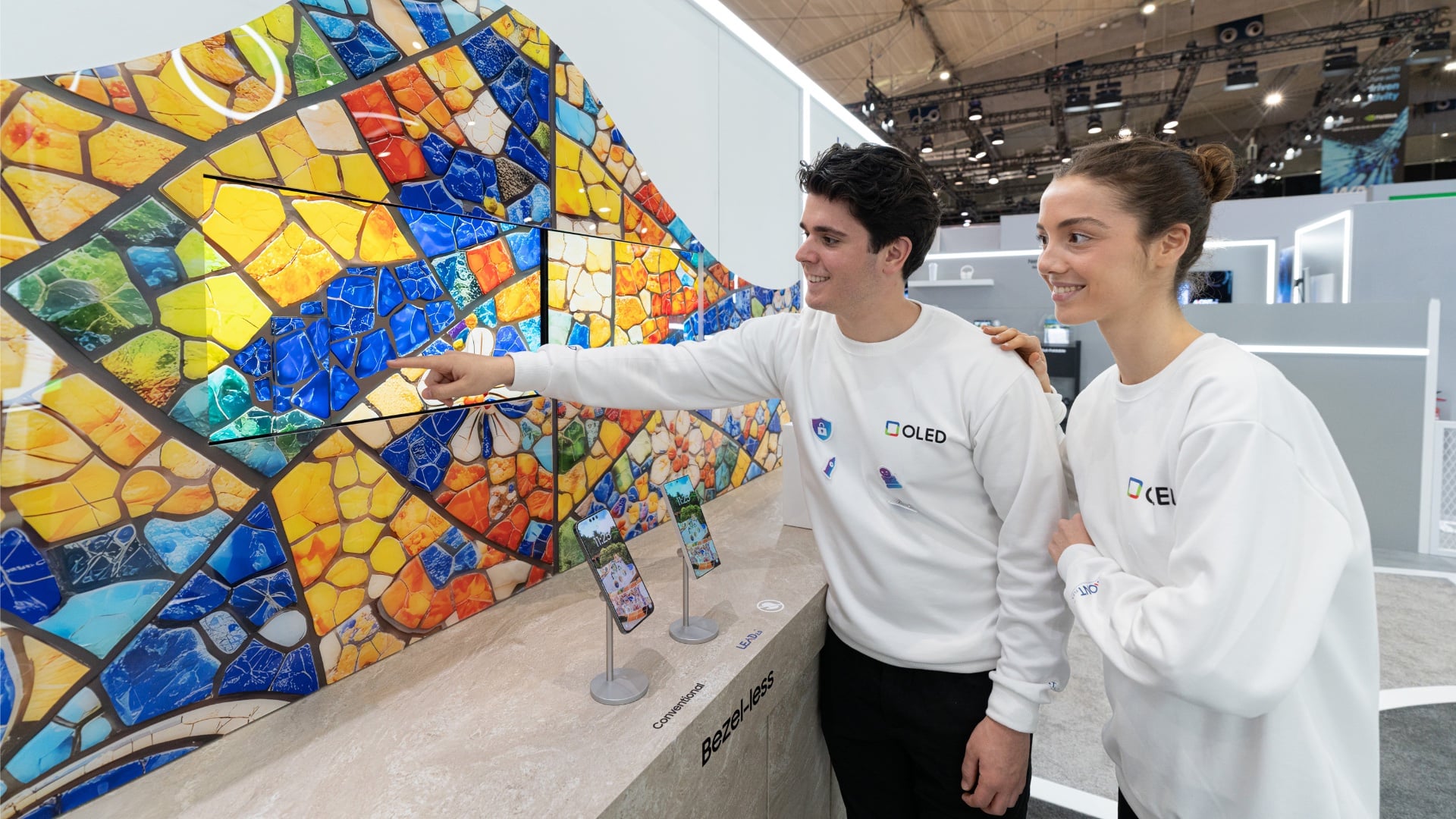
To round out the exhibition, Samsung unveiled the "Bezel-less OLED Wall." This artistic installation combined two 6.8-inch mobile panels with two 27-inch QD-OLED panels in a tiled mosaic. Inspired by the legendary architecture of Barcelona’s Park Güell, the display highlighted just how thin bezels have become, allowing for modular screens that look like a single, continuous canvas.
What is Flex Magic Pixel technology?
Flex Magic Pixel (FMP) is a specialized display technology that allows a screen to control its viewing angles. When activated, it prevents people sitting next to you from seeing what is on your screen, providing a hardware-level privacy solution for flagship devices like the Galaxy S26 Ultra.
How does the Mini PetBot use OLED tech?
The Mini PetBot features a 1.34-inch circular OLED display that acts as its "face." Because OLED pixels can be controlled individually, the robot can display deep blacks and vibrant colors to create highly expressive and lifelike animated emotions that react to user interaction.
What makes the OLEDoS panel different from regular phone screens?
OLEDoS (OLED on Silicon) uses a silicon wafer as a base instead of glass or plastic. This allows for microscopic pixel placement, resulting in a density of 5,000 pixels per inch. This extreme resolution is necessary for mixed reality (XR) headsets to make digital images look as sharp as the real world.
What is the purpose of the AI Toyhouse concept?
The AI Toyhouse is a concept designed to show how flexible displays can be used in interior design and retail. It uses a bendable 18.1-inch panel to create a dynamic enclosure that can wrap around physical objects, creating an interactive and futuristic display environment.
Will these concepts be available to consumers soon?
While some technologies, like the Flex Magic Pixel, are already appearing in flagship phones, others like the PetBot and OLED Wall remain concepts. However, they serve as a roadmap for how Samsung Display plans to integrate screens into cars, smart home devices, and wearable tech in the near future.
🔎 Ultimately, Samsung’s presence at MWC 2026 confirms that the company no longer views OLED as just a smartphone component. By pushing the boundaries of pixel density, flexibility, and privacy, they are setting the stage for a world where every surface has the potential to become a high-definition, interactive portal. Whether it's through a tiny robot's face or an expansive mosaic wall, the future of display technology is clearly brighter, sharper, and more flexible than ever before.
Post a Comment