
Is Someone Peeking? Samsung Survey Unveils the Shocking Reality of Smartphone Privacy in Public
Our smartphones have evolved into digital extensions of our private lives, leading us to trust that they can securely guard our most sensitive information. For the most part, modern encryption and security protocols do a fantastic job of preventing remote hacking. However, there is one security vulnerability that no anti-phishing software can fix: the person sitting right next to you on the bus or train. Visual privacy is becoming a major concern in our hyper-connected world.
- ✨ Over 50% of Europeans admit to looking at a stranger's phone screen in public settings.
- ✨ Public transport is identified as the primary location where "visual hacking" occurs.
- ✨ Sensitive data, including banking details and private messages, are frequently exposed to prying eyes.
- ✨ Samsung’s new Privacy Display technology offers a toggleable solution to protect user data.
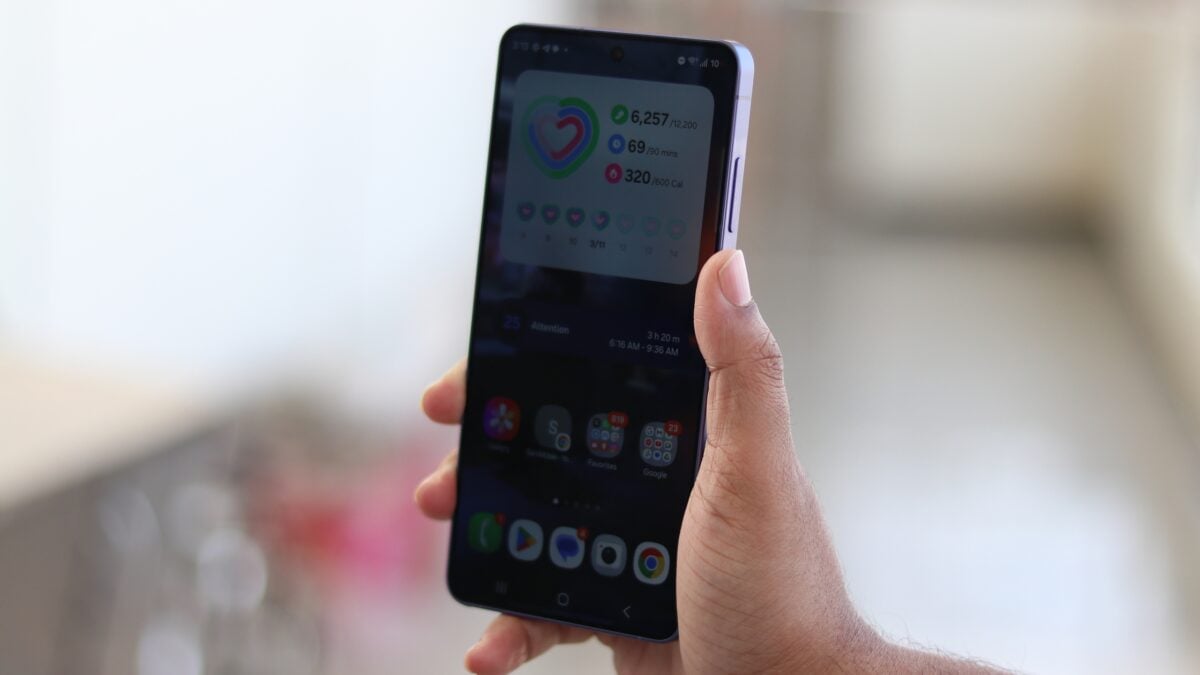
The Galaxy S26 Ultra in action, demonstrating its advanced privacy protection features.
To combat the issue of prying eyes, Samsung developed the Galaxy S26 Ultra’s Privacy Display feature. Unlike traditional security patches that fix software bugs, this feature addresses a physical privacy problem. From a technical perspective, the implementation is remarkably effective, but it raises an important question: do we actually need this level of protection in our daily lives?
The Statistics of Public Phone Peeking
According to a comprehensive survey conducted by Samsung, the act of looking at someone else's screen is far more common than most users realize. The data suggests that smartphone privacy is constantly being compromised in crowded areas. Here is a breakdown of the survey's findings regarding European users:
- 56% of respondents admit they have accidentally glanced at a stranger's phone screen.
- 24% of people confess to looking intentionally, driven by pure curiosity.
- 57% of these incidents occur on public transport, such as buses and subways.
- 33% of users have spotted sensitive or deeply personal content on a stranger's device.
- While 27% look away immediately, a small but significant 7% admit to continuing their discreet observation.
The types of content most frequently exposed include personal photographs (38%), private video calls (32%), text messages (29%), and social media feeds (27%). Perhaps most concerning is that 11% of people have seen a stranger's banking details, and 12% have noticed dating app notifications.
How Samsung is Fighting Back
Samsung’s research highlights a passive acceptance of this lack of privacy; only 21% of people believe that using a phone in public is a truly private activity. When users feel they are being watched, 42% simply hide their phones, while only 10% are brave enough to confront the "peeker."
The Privacy Display on the Galaxy S26 Ultra mimics the effect of physical privacy screen protectors but with a digital twist. It uses advanced hardware to narrow the viewing angles, making the screen appear dark and unreadable to anyone not looking at it directly from the front.
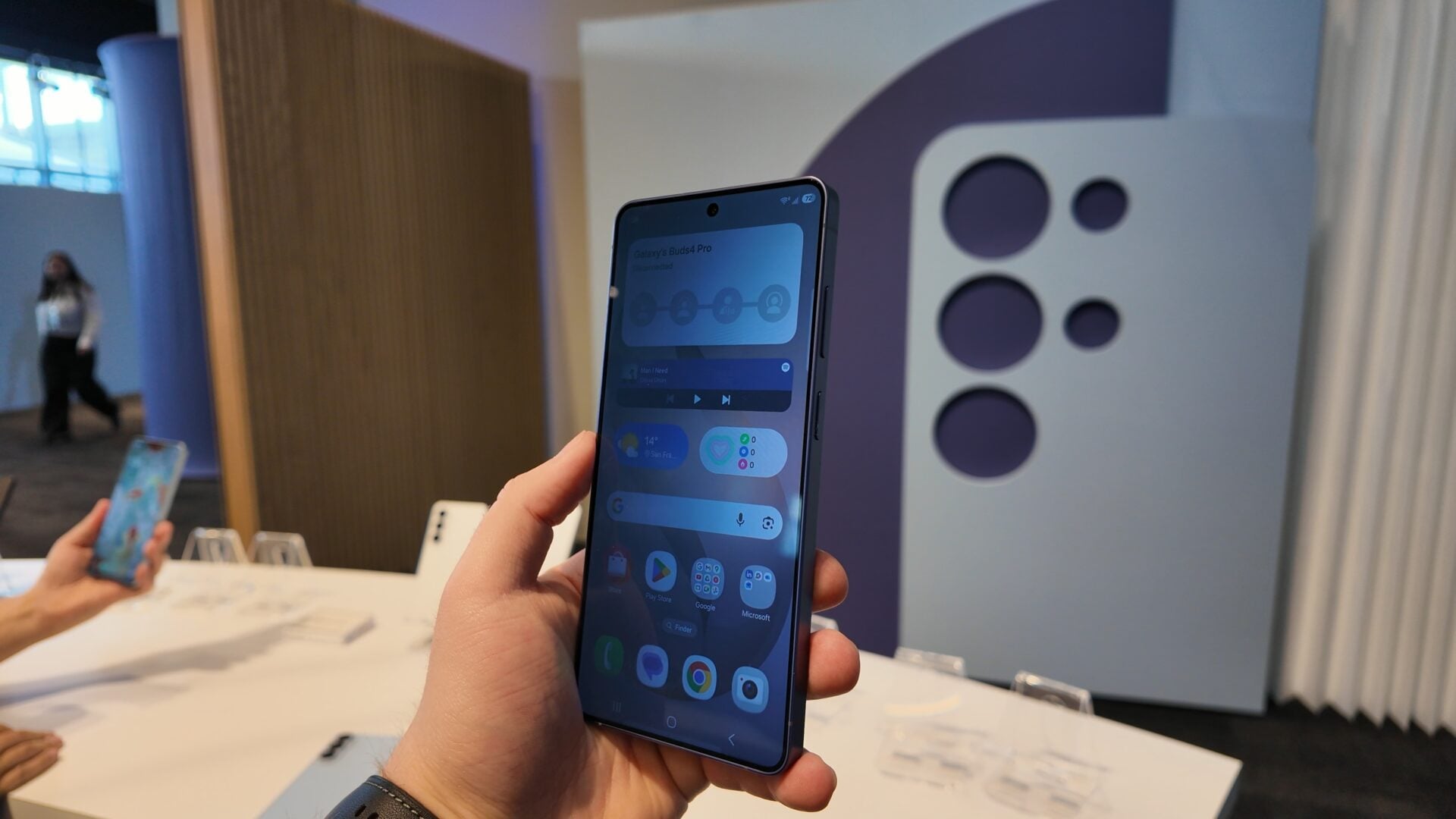
Visualizing how the screen darkens for bystanders while remaining clear for the user.
The standout advantage of this built-in solution is customization. Unlike a plastic film that stays on your phone forever, this feature can be toggled via the quick settings menu. It is a modern solution to a very modern social problem.
For those interested in a deeper dive into the hardware and software capabilities of Samsung's latest flagship, our comprehensive video review covers everything you need to know about the device's performance and unique features.
Currently, this specific Privacy Display technology is exclusive to the Ultra model. While there is hope that it might trickle down to the standard and Plus models in the future, for now, it remains a premium perk for those who prioritize absolute confidentiality in public spaces.
How does the Privacy Display on the Galaxy S26 Ultra work?
The feature uses specialized light-control layers within the OLED panel that can be electronically adjusted. When activated, it restricts the light's exit angle, ensuring that only the person directly in front of the screen can see the content, while it appears black to anyone looking from the side.
Is this feature always on?
No, that is the best part. Unlike physical privacy filters, you can turn the Privacy Display on or off through the software settings. This allows you to have a bright, wide-angle screen for watching movies with friends and a private screen when you are on the train.
Does using Privacy Display affect battery life?
Because the technology requires managing the light output more precisely, there is a negligible impact on battery life. However, for most users, the trade-off for significantly increased security is well worth the minor power consumption.
What should I do if I catch someone looking at my phone?
According to the survey, most people either put their phone away or tilt it. With the S26 Ultra, you can simply enable the privacy mode. If you are on a different device, being mindful of your surroundings and using a lower brightness setting can help reduce visibility.
🔎 In an era where our most personal details are stored on a device we carry everywhere, the threat of visual hacking is real and widespread. Samsung’s survey proves that "prying eyes" isn't just a paranoid thought—it's a daily occurrence for millions. By integrating hardware-level privacy solutions like the Privacy Display, Samsung is setting a new standard for mobile security that goes beyond encryption, protecting our data from the people standing right next to us. As we continue to use our phones in increasingly crowded spaces, such features may soon become a necessity rather than a luxury.
Post a Comment