
Samsung Display QD-OLED Panels Set New Standard for Viewing Angles with QuantumView Verification
Samsung Display has officially revealed that its cutting-edge QD-OLED technology for monitors and televisions has successfully completed the rigorous QuantumView verification process. Conducted by UL Solutions, this certification highlights the exceptional performance of these panels, particularly when it comes to maintaining visual fidelity from extreme angles.
- ✨ Verified by UL Solutions under the prestigious QuantumView program for superior accuracy.
- ✨ Retains over 60% of original luminance even at a wide 60-degree viewing angle.
- ✨ Showcases significantly lower color distortion compared to traditional LCD technology.
- ✨ Optimized for professional reference displays, gaming setups, and premium home cinemas.
Precision Testing and QuantumView Standards
As a core component of the QuantumView verification, UL Solutions meticulously analyzes how a screen's color accuracy and luminance behave as the viewer moves away from the center. The testing involves shifting the viewing angle in 10-degree increments, starting from the direct front and moving all the way to a 60-degree off-axis position.
Exceptional Luminance and Color Stability
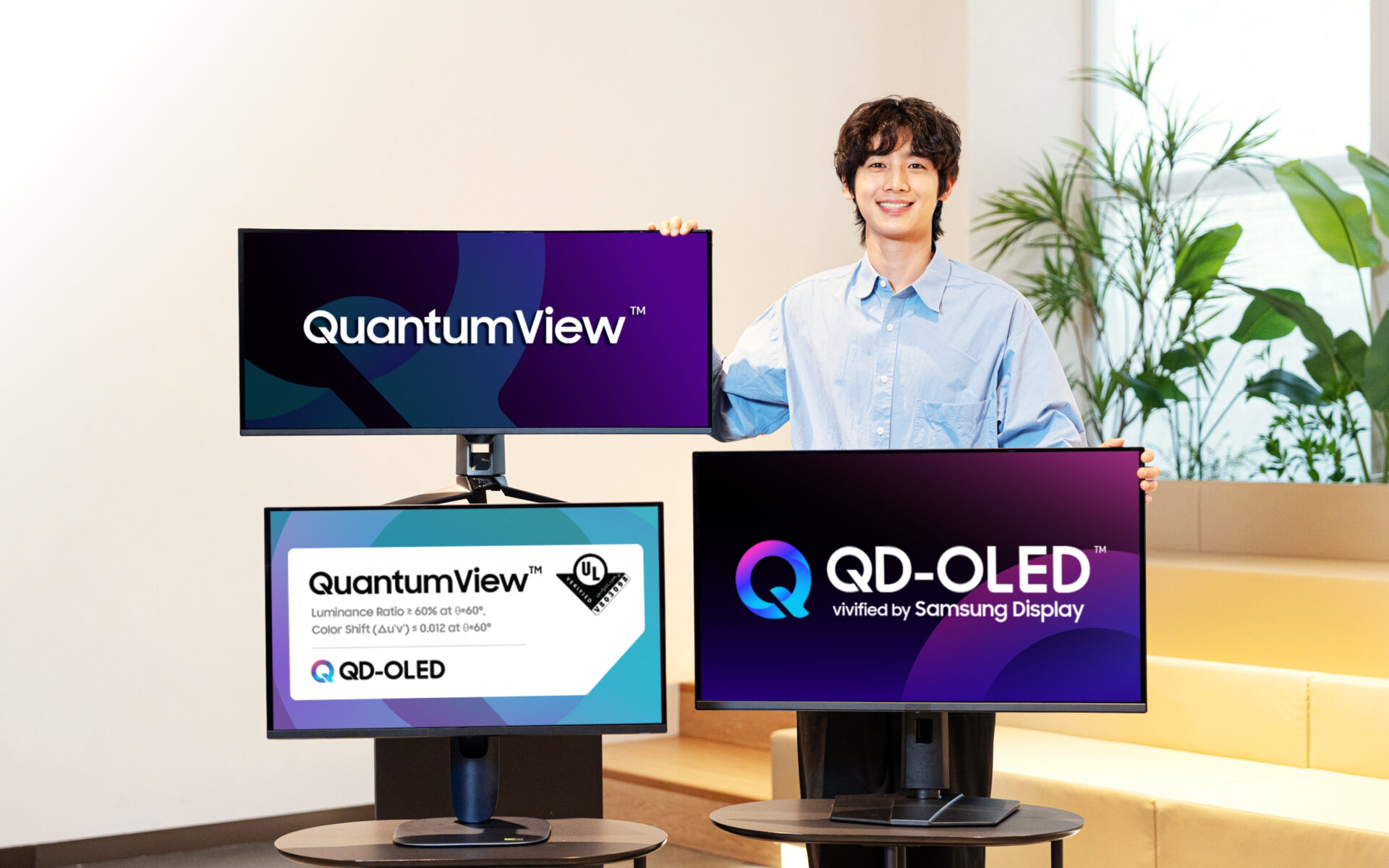
The evaluation results were remarkable for Samsung Display. The QD-OLED panels managed to retain more than 60% of their brightness at a 60-degree angle. Furthermore, the color shift was measured at a minimal 0.012 Δu’v’. In a direct comparison, most standard LCD panels suffer a dramatic luminance drop, often falling below 20%, while their color distortion can spike to 0.025 at the same angle.
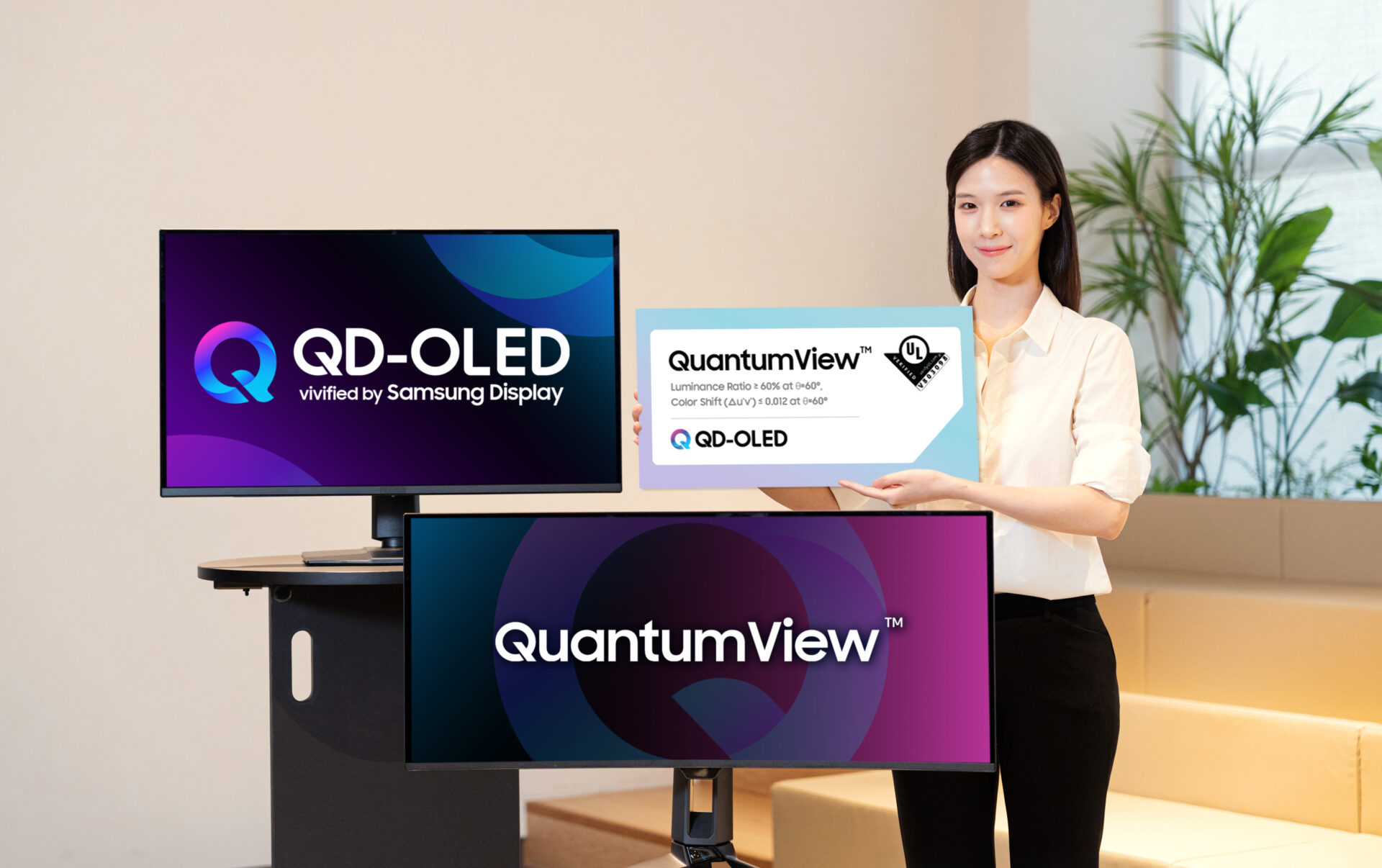
This data proves that QD-OLED panels offer vastly superior brightness retention and much lower color distortion than traditional liquid crystal displays when viewed from the side. This makes the technology an ideal choice for large-scale TVs, professional-grade reference monitors, and complex multi-monitor configurations where off-axis viewing is common.
A Vision for Future Display Innovation
Brad Jung, Vice President and Head of the Large Display Marketing Team at Samsung Display, emphasized the importance of this milestone. He stated that the QuantumView verification objectively proves that QD-OLED technology delivers consistent image quality regardless of the viewing environment. The company plans to continue its collaboration with global brands to lead the next wave of innovation in the large-area OLED market.
What exactly is the QuantumView verification program?
QuantumView is a specialized verification program by UL Solutions that evaluates display performance. It focuses specifically on how color accuracy and luminance (brightness) change as a viewer moves from a direct front view to wider angles, ensuring the screen remains high-quality from all perspectives.
How does QD-OLED compare to LCD in terms of brightness at an angle?
The difference is significant. While QD-OLED panels retain over 60% of their brightness at a 60-degree angle, most LCD panels drop to less than 20% brightness. This means QD-OLED stays clear and vibrant even if you aren't sitting directly in front of it.
Why is color shift important for display technology?
Color shift refers to how colors change or become distorted when viewed from the side. QD-OLED has a very low color shift (0.012 Δu’v’), whereas LCDs can have double that distortion. Low color shift is vital for professional photo editing and immersive gaming.
What are the best use cases for these verified panels?
Because of their wide viewing angles, these panels are perfect for family living room TVs, triple-monitor gaming setups, and professional reference displays where color consistency is mandatory across the entire surface of the screen.
🔎 In conclusion, the QuantumView verification serves as a powerful testament to the engineering excellence of Samsung's QD-OLED panels. By solving the age-old problem of color and brightness degradation at wide angles, Samsung has not only improved the consumer experience for home entertainment but has also provided a robust solution for professional industries that demand absolute visual precision.
Post a Comment