
Tesla and Samsung Strengthen Ties: Introducing the AI4 Plus Chip for Future Electric Cars
The landscape of autonomous driving is evolving at a breakneck pace, and the partnership between automotive giant Tesla and semiconductor leader Samsung is reaching new heights. As the demand for more sophisticated onboard processing grows, Tesla is once again turning to Samsung Foundry to power its next generation of self-driving hardware, ensuring that the future of electric mobility remains both intelligent and efficient.
Article Highlights:
- ✨ Tesla officially selects Samsung Foundry to manufacture the upcoming AI4 Plus chip.
- ✨ The new processor is designed specifically for the HW4 Plus self-driving computer system.
- ✨ Mass production is slated to begin next year, likely utilizing a refined 7nm process node.
- ✨ Hardware upgrades include a massive jump to 64GB of total system memory.
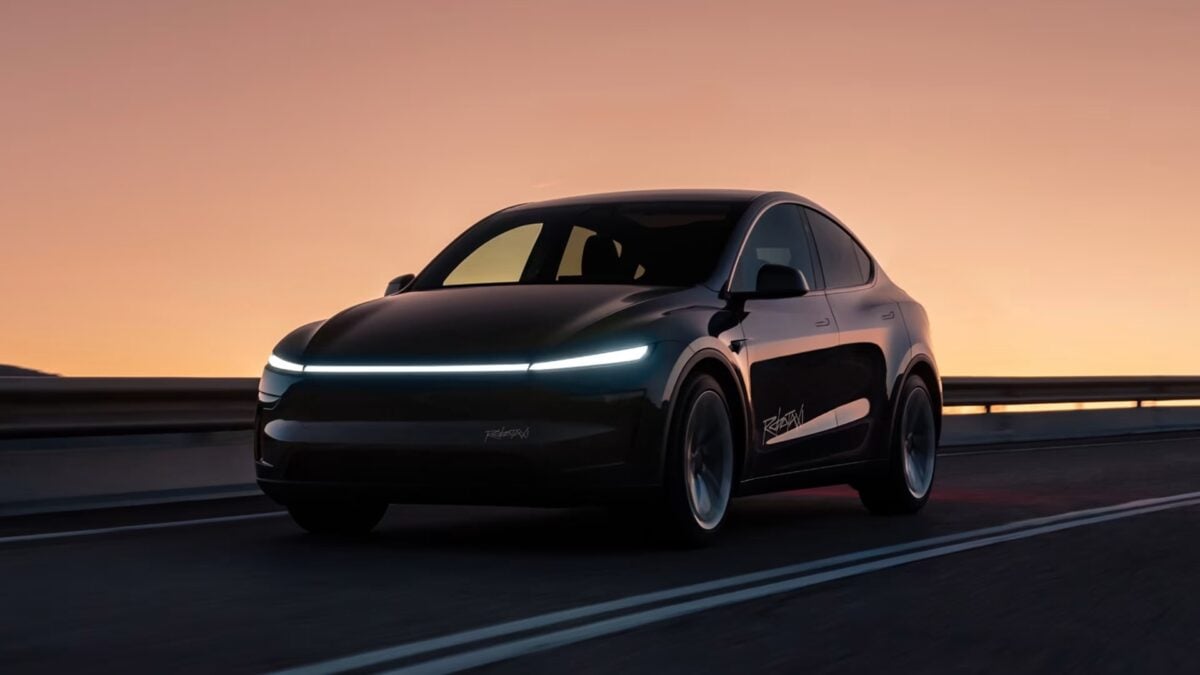
Only a few months have passed since Tesla confirmed that Samsung Foundry would be the primary manufacturer for its AI5 and AI6 chipsets. While the industry has been buzzing about the completion of the tape-out process for the AI5, Tesla CEO Elon Musk recently dropped a significant update during the Q1 2026 earnings call. Samsung has been entrusted with yet another critical component: the AI4 Plus processor.
The Technical Evolution of the AI4 Plus and HW4 Plus
The AI4 Plus, also referred to as the AI4.1, represents a strategic bridge in Tesla's hardware roadmap. Expected to enter mass production at Samsung’s facilities next year, this chip is likely to be fabricated on a 7nm process node. This choice reflects a balance between proven stability and high-performance output, mirroring the architecture of the standard AI4 chip but with enhanced capabilities tailored for the new HW4 Plus computer.
This new hardware suite is set to redefine the internal processing power of electric cars produced by Tesla. The HW4 Plus system will utilize a dual-chip configuration, featuring two AI4 Plus processors. To support the intensive data processing required for real-time environment mapping, each chip will be paired with 32GB of RAM, resulting in a formidable 64GB of total system memory.
Strategic Allocation: Cars vs. Robotics
Interestingly, Musk clarified the distinct roles these chips will play in Tesla's broader ecosystem. While the AI4 Plus focuses on enhancing the current fleet of vehicles, the more advanced AI5 chip is being reserved for different frontiers. According to the CEO, the current AI4 hardware is already more than capable of handling Full Self-Driving (FSD) tasks for the immediate future.
Consequently, the AI5 chip will be diverted toward Tesla's data centers and the Optimus humanoid robot project. This separation ensures that Tesla's automotive branch remains cost-effective and optimized, while its robotics and AI infrastructure branches push the absolute limits of semiconductor technology.
What exactly is the Tesla AI4 Plus chip?
The AI4 Plus (or AI4.1) is an upgraded version of Tesla's custom-designed silicon, manufactured by Samsung Foundry. It is specifically designed to power the HW4 Plus self-driving computer, providing the necessary computational overhead for advanced autonomous features.
Why is Tesla using a 7nm process instead of something smaller?
The 7nm process node offered by Samsung provides a mature and highly reliable manufacturing environment. For automotive applications, reliability and heat management are paramount, making the 7nm node an ideal choice for the AI4 series while more experimental nodes are reserved for non-automotive AI.
How does the HW4 Plus memory compare to previous versions?
The HW4 Plus system features a significant memory boost. By pairing two AI4 Plus chips with 32GB of RAM each, the total system reaches 64GB of RAM, allowing the vehicle to process more complex visual data and neural network calculations simultaneously.
Will the AI5 chip be available in Tesla cars soon?
No, Elon Musk has indicated that the AI5 chip will not be integrated into vehicles in the immediate future. Instead, it is being prioritized for the Optimus humanoid robot and Tesla's massive data center operations, as the AI4 hardware is currently sufficient for vehicle autonomy.
🔎 In conclusion, the collaboration between Tesla and Samsung Foundry continues to be a cornerstone of the modern automotive revolution. By securing the production of the AI4 Plus chip, Tesla ensures a steady supply of high-performance silicon to power its most advanced self-driving computers yet. As manufacturing begins next year, the integration of 64GB of RAM and dual-processor architecture signals a future where Tesla vehicles are not just electric, but are essentially supercomputers on wheels, capable of navigating the world with unprecedented precision.
Post a Comment