
Samsung’s Next-Gen Stretchable Micro LED: The Future of Immersive Automotive Displays
Samsung Display continues to push the boundaries of screen technology with its latest innovation. At the recent Society for Information Display (SID) Display Week 2026, the tech giant unveiled a revolutionary stretchable Micro LED display panel. This groundbreaking technology is specifically engineered to provide a more immersive and interactive visual experience, particularly within the evolving landscape of modern transportation.
- ✨ Features a high-resolution pixel density of 200ppi, a 67% improvement over previous versions.
- ✨ Specifically designed for automotive use, including 3D digital dashboards and instrument clusters.
- ✨ Capable of physically changing shape to adapt to different driving conditions and environments.
- ✨ Integrates seamlessly with Software Defined Vehicle (SDV) systems for maximized visibility.
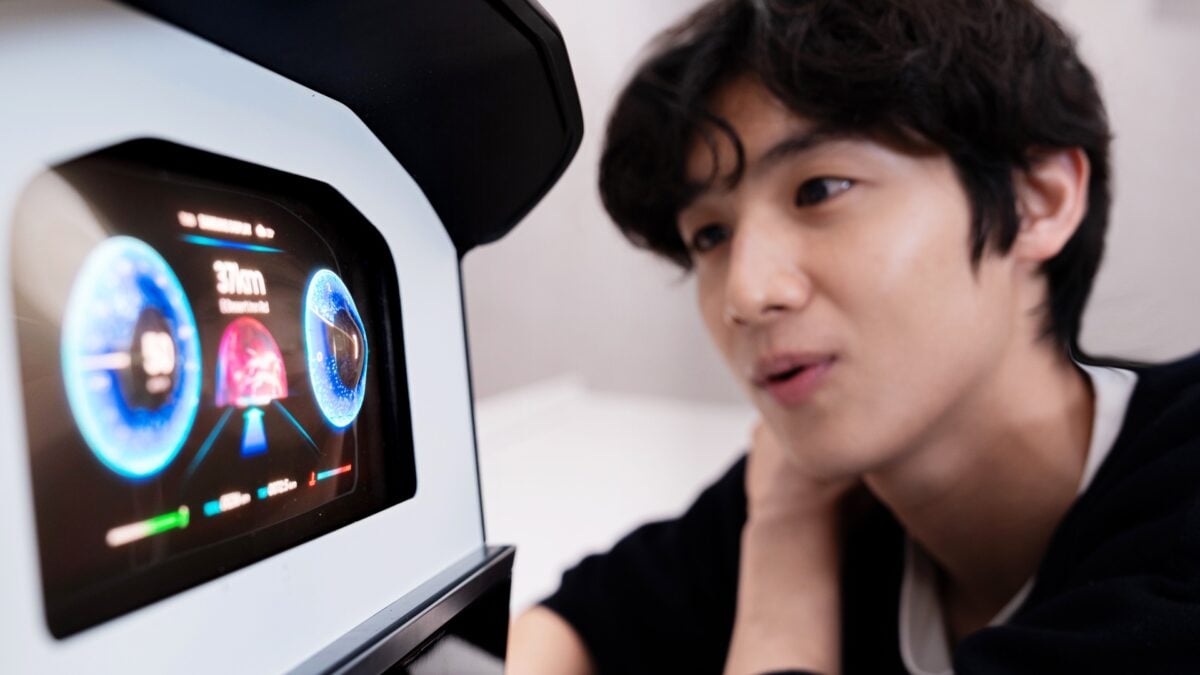
A Leap in Clarity: Sharper Visuals for the Smart Cabin
The latest iteration of Samsung Display's stretchable panel marks a significant technical milestone. By achieving a pixel density of 200ppi, the screen is substantially sharper than the 120ppi model showcased during the CES 2025 events. According to company representatives, this level of fidelity indicates that the technology is finally approaching a stage where it can be integrated into consumer-ready products.
Demonstrated at the SID Display Week expo in Los Angeles, California, the panel was presented as a core component of a futuristic vehicle dashboard. The unique property of this Micro LED technology is its ability to physically flex and distort. This allows the display to transform into a three-dimensional interface that can emphasize specific data points or navigation cues depending on the driver's needs, all while maintaining crisp text and vibrant colors.
Engineers at Samsung explained that a redesigned pixel structure was the key to this breakthrough. By optimizing the "bridge" architecture between pixels, they were able to pack more light-emitting elements into the same surface area. This advancement is expected to play a crucial role in Software Defined Vehicles (SDV), where the interior environment must dynamically adjust to provide the safest and most intuitive experience possible.
How does the stretchable Micro LED differ from traditional flexible screens?
Unlike standard flexible or curved OLED screens that are fixed in a specific shape once installed, Samsung's stretchable Micro LED can actively change its form. It can expand, contract, and create tactile-like 3D surfaces on demand, offering a level of interaction that static screens cannot match.
Why is 200ppi a significant milestone for this technology?
Pixel density is critical for legibility, especially in vehicles where drivers need to glance at information quickly. Moving from 120ppi to 200ppi represents a 67% increase in detail, making the text as sharp as a high-end smartphone or tablet, which is essential for complex navigation maps and instrument data.
What are the primary benefits for future car designs?
The primary benefit is the ability to maximize visibility and ergonomics. A dashboard could physically "pop out" a button or a warning sign when needed and then retract to a flat surface to minimize distractions, creating a truly dynamic and adaptive cockpit.
When can we expect to see these displays in actual vehicles?
While Samsung Display has stated the technology is nearing product-ready levels, it typically takes a few years for automotive manufacturers to integrate such advanced hardware into production vehicles. We are likely looking at the next generation of premium electric and autonomous vehicles as the first adopters.
🔎 In conclusion, Samsung’s latest demonstration at SID 2026 proves that the future of display technology is not just about more colors or higher brightness, but about physical adaptability. By successfully combining high-resolution Micro LED tech with a stretchable form factor, Samsung is paving the way for a new era of automotive design where the car's interior is as intelligent and flexible as the software running it.
Post a Comment