
How the Galaxy S26 Ultra's Privacy Display Changed My View on Public Phone Use
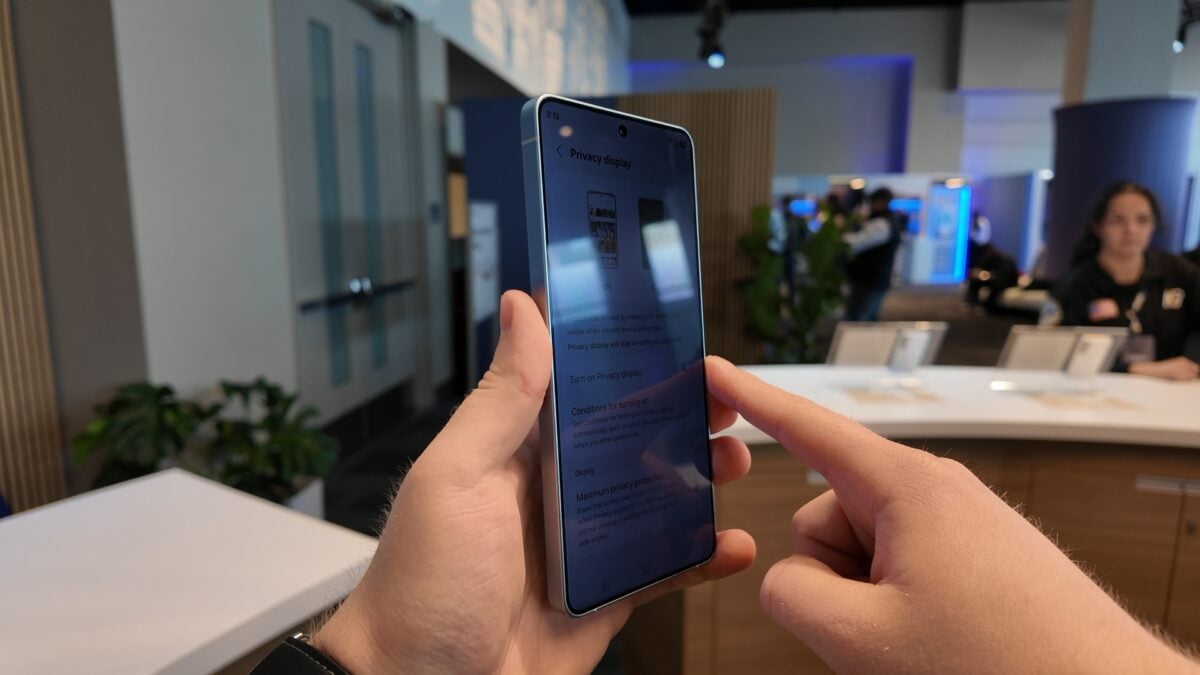
When I first unboxed my Galaxy S26 Ultra, I handled the new Privacy Display feature exactly how most tech enthusiasts would. I toggled it on, enjoyed the immediate sense of digital solitude, and even set up a few automation routines to ensure it activated whenever I left the house. It felt like a solid, practical addition to Samsung's flagship—a tool designed to keep prying eyes away from my personal data. I was happy with it, but I didn't realize its true value until a mundane encounter shifted my entire perspective.
- ✨ Discovering why the Galaxy S26 Ultra Privacy Display is a social game-changer.
- ✨ How accidental snooping happens every day in elevators and public transport.
- ✨ The realization that privacy features protect the people around you as much as yourself.
- ✨ Why "passive snooping" has become a normalized part of our modern mobile lives.
The turning point came just a few days later during a routine elevator ride. A neighbor stepped in and stood directly across from me. As they pulled out their phone to check a message, I found myself—quite unintentionally—seeing every word on their screen. The display was bright, the text was large, and because of the proximity, it was impossible not to notice. I wasn't trying to be nosy, and I certainly wasn't "snooping" in the traditional sense. The information was simply there, projected into my field of vision without any effort on my part.
The Hidden Social Benefit of Privacy Technology
This awkward moment sparked a revelation: for years, I had viewed Privacy Display technology as a defensive shield for my own data. However, standing in that elevator, I realized it serves a dual purpose. It doesn't just protect me from others; it protects others from me. It shields the casual bystander from the burden of seeing private information they never asked to see in the first place.
We all do it, often subconsciously. We glance up from our own devices in a bus, a checkout line, or a waiting room, and our eyes naturally gravitate toward the glowing rectangle in someone else's hand. We see private photos, intimate texts, or sensitive work emails. We aren't malicious snoopers, but we end up seeing more than we intended. It’s a strange, modern phenomenon where we all pretend we aren't looking while everyone’s business is on full display.
The Galaxy S26 Ultra addresses this small but constant social friction. By narrowing the viewing angles and ensuring that only the person holding the phone can clearly see the content, Samsung has created a way to navigate public spaces with less social anxiety. It's not just about keeping my secrets; it's about sparing the people around me the accidental guilt of catching a glimpse of my private life.Ultimately, the Privacy Display is a feature I didn't know I needed until I saw the world from the "snooper's" perspective. It’s a thoughtful solution to an everyday problem that most of us have simply learned to ignore. Now, when I use my phone in public, I feel a sense of relief knowing that my screen is for my eyes only, making the world just a little bit more comfortable for everyone else in the elevator.
How exactly does the Privacy Display on the Galaxy S26 Ultra work?
The technology uses a specialized layer within the AMOLED panel that limits the light's exit angle. While the screen remains perfectly bright and clear for the person looking at it head-on, it appears significantly darker or completely obscured when viewed from the side, preventing bystanders from reading the content.
Can I turn the Privacy Display off when I am at home?
Yes, the feature is completely optional. You can manually toggle it from the Quick Settings panel or, more efficiently, use One UI Routines to automatically disable it when you are connected to your home Wi-Fi or in a trusted location.
Does using the Privacy Display drain the battery faster?
In most cases, the impact on battery life is negligible. Because the technology is integrated into the display's hardware structure rather than relying on high-intensity software processing, you won't notice a significant drop in endurance while the feature is active.
Will a screen protector interfere with this feature?
Standard clear screen protectors usually do not interfere with the built-in privacy tech. However, using a secondary "privacy" screen protector on top of the Galaxy S26 Ultra’s native Privacy Display might make the screen too dark for comfortable use, so it is generally not recommended.
🔎 In conclusion, the Galaxy S26 Ultra’s Privacy Display is more than just a spec on a sheet; it is a sophisticated response to the lack of boundaries in our digital age. By acknowledging that we are all "accidental snoopers" from time to time, Samsung has provided a tool that fosters both personal security and social courtesy. It’s a rare example of technology that makes us more aware of our surroundings by allowing us to retreat into our own private world when we need it most.
Post a Comment