
How Samsung and KDDI are Revolutionizing 5G Performance with AI-Powered Optimization
The integration of Artificial Intelligence into telecommunications is no longer a futuristic concept but a present-day reality that is significantly enhancing user experiences. Samsung Electronics has recently reached a major milestone in this field by demonstrating how AI can drastically improve the efficiency and speed of modern cellular networks. Through a strategic partnership with a leading Japanese carrier, Samsung is setting new benchmarks for what 5G technology can achieve when paired with intelligent automation.
- ✨ Successful trial completed on KDDI’s 5G Standalone (SA) network in Japan.
- ✨ AI-powered RAN Speed Optimizer (RSO) boosted download speeds by up to 52%.
- ✨ Technology utilizes predictive algorithms to customize parameters for individual cells.
- ✨ Part of Samsung’s CognitiV Network Operations Suite for AI-native infrastructure.
Samsung has officially announced the successful completion of a trial focused on AI-powered 5G network optimization in collaboration with the Japanese mobile network operator KDDI. This trial, conducted on a live 5G Standalone (SA) network, proved that intelligent software can solve complex congestion issues that traditional methods often struggle to manage. By utilizing advanced algorithms, the companies were able to deliver a much more responsive and faster data experience to consumers in real-world environments.
Massive Speed Gains in Dense Urban Areas
Samsung Networks, the specialized division of Samsung Electronics, deployed its RAN Speed Optimizer (RSO) technology during the test. The results were impressive: download speeds on KDDI’s 5G SA network improved by more than 31% during peak usage hours. Even more remarkable was the performance in dense urban locations, where speeds surged by as much as 52%. This indicates that Samsung 5G networks are becoming increasingly capable of handling the high-density traffic found in major metropolitan hubs.
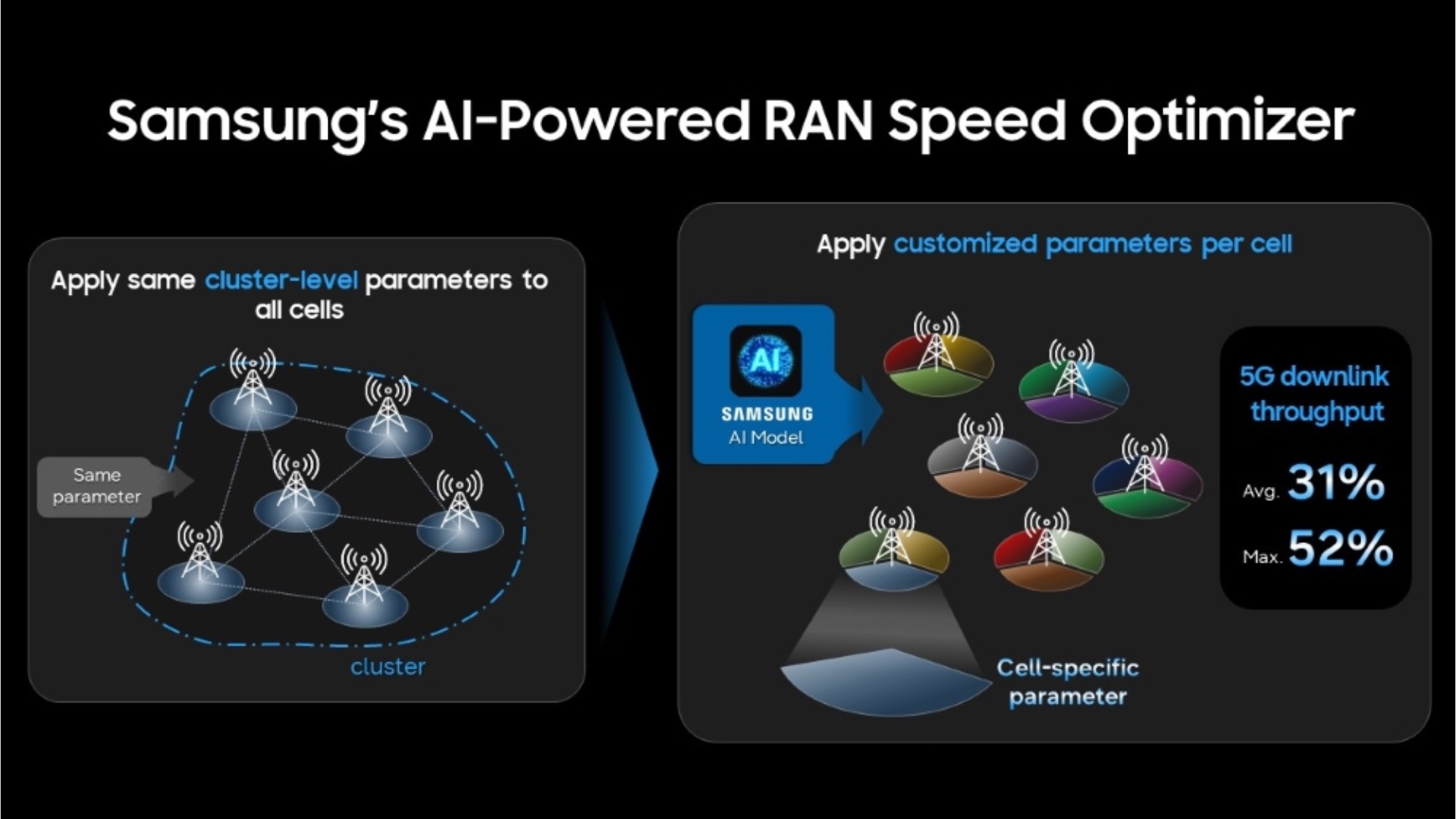
The secret to this improvement lies in how RSO deviates from traditional network management. Conventional techniques typically apply uniform parameters across entire clusters of cells. In contrast, Samsung’s RSO uses an AI-based prediction algorithm to analyze specific data from each network site. It then recommends customized parameters for every individual cell, allowing the network to automatically adapt to fluctuating conditions and user demands in real-time, thereby maximizing overall efficiency.
Building an AI-Native Future
The RSO tool is a core component of Samsung’s CognitiV Network Operations Suite (NOS), which features a variety of intelligent management and automation tools. Both KDDI and Samsung Networks intend to deepen their collaboration to eventually transition the entire network into an AI-native infrastructure. This trial builds upon their previous successful ventures, which included pioneering work in network slicing and specialized 5G solutions for enterprises.
What exactly is Samsung's RAN Speed Optimizer?
It is an AI-driven software solution designed to analyze network traffic and automatically adjust cell parameters to maximize data throughput and efficiency for mobile users.
How does this technology benefit the average smartphone user?
Users will experience significantly faster download speeds, especially in crowded areas like city centers or during peak times when the network is usually congested.
Why is AI better than traditional network optimization?
Traditional methods are often "one-size-fits-all," whereas AI can predict traffic patterns and adjust individual cell towers specifically based on their unique environment and current load.
Is this technology only available in Japan?
While this specific trial was conducted with KDDI in Japan, Samsung's CognitiV Network Operations Suite is a global solution that can be deployed by network operators worldwide.
🔎 This successful trial marks a turning point in the evolution of telecommunications, proving that AI is the key to unlocking the full potential of 5G Standalone networks. By moving away from static configurations and embracing dynamic, predictive optimization, Samsung and KDDI are paving the way for a more connected and efficient world. As these technologies continue to mature, we can expect mobile networks to become smarter, faster, and more reliable than ever before, seamlessly supporting the next generation of digital innovation.
Post a Comment