
Samsung’s Semiconductor Evolution: Advanced 2nm Chips Set for 2027 Production
Samsung has recently unveiled significant updates regarding its roadmap for next-generation semiconductor fabrication technologies. These updates highlight the development of advanced 2nm process nodes and the groundwork for the future 1.4nm first-generation process. Specifically, the tech giant has introduced its most sophisticated 2nm technology to date, aiming for full-scale mass production within the next few years. This move signals a major push to maintain a competitive edge in the global chip manufacturing landscape, promising enhanced efficiency and performance for future mobile and AI-driven devices.
- ✨ Samsung is currently developing at least four distinct 2nm process nodes tailored for different industries.
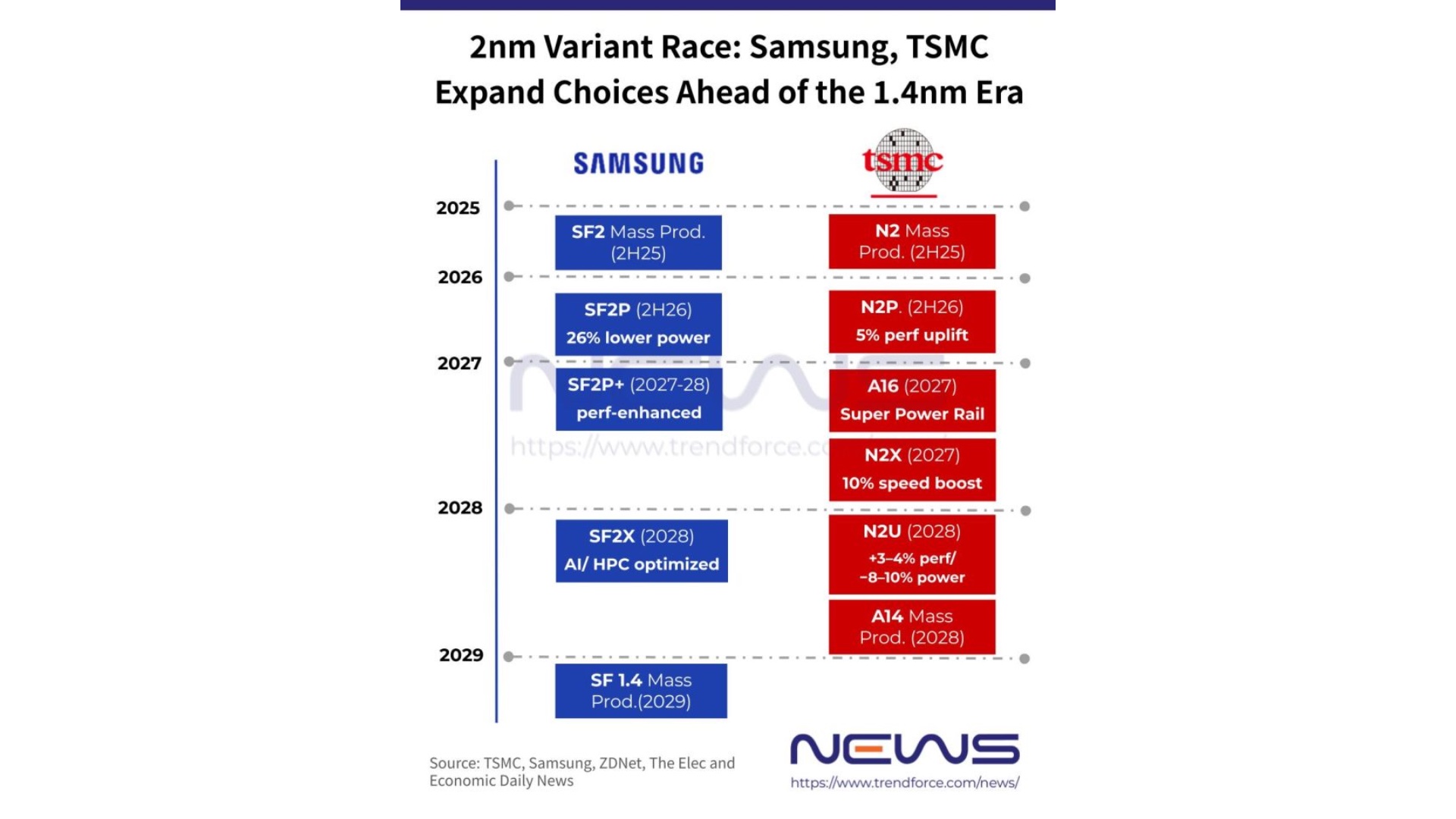
- ✨ The third-generation SF2P+ node is expected to enter mass production between 2027 and 2028.
- ✨ New technologies like SF2P promise up to a 26% improvement in power efficiency compared to earlier generations.
- ✨ Specialized nodes for AI, high-performance computing (HPC), and servers are slated for release by 2028.
The Multi-Node Strategy: Samsung’s 2nm Roadmap
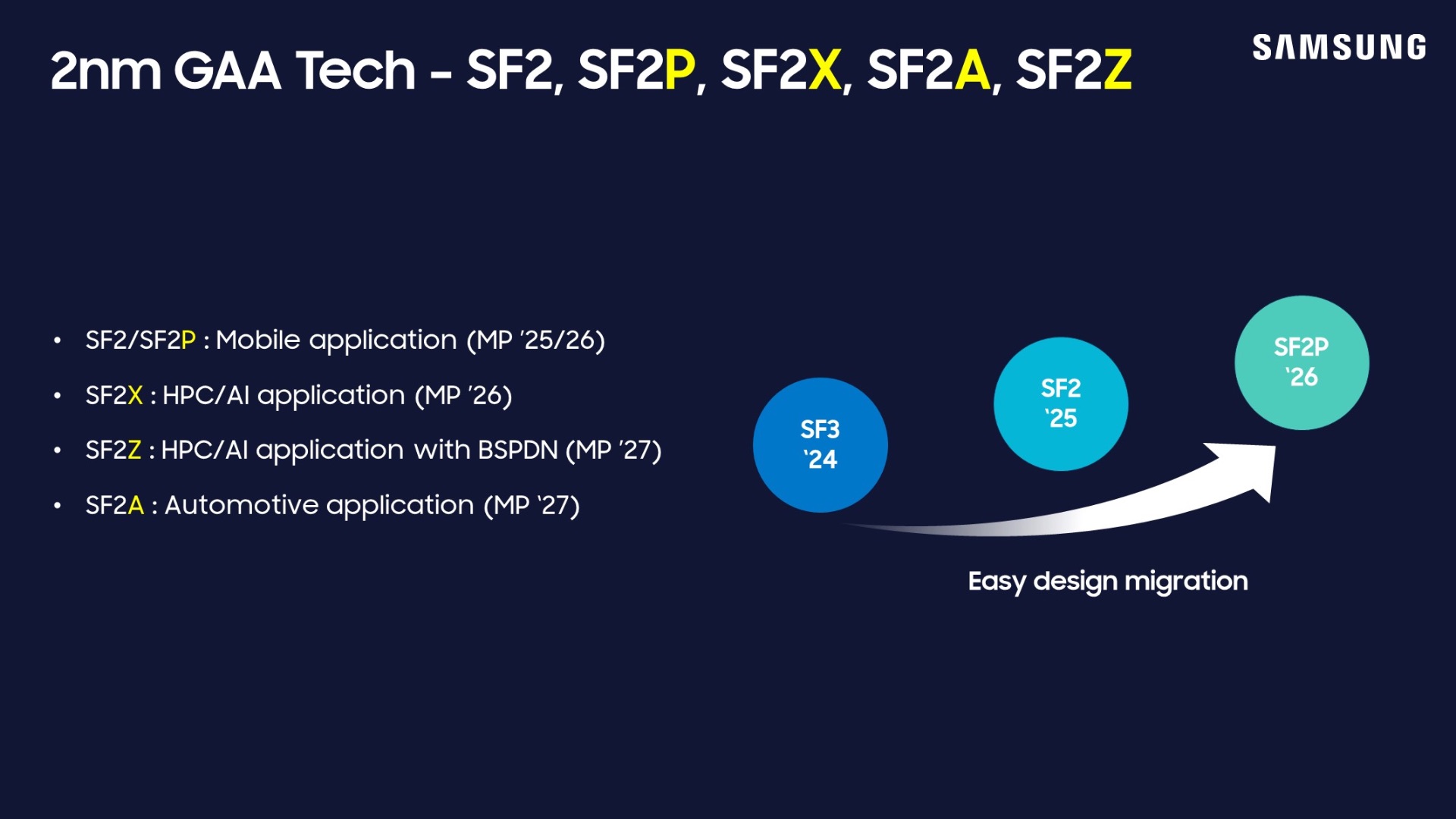
Samsung Foundry, the dedicated contract manufacturing arm of Samsung Electronics, has detailed an ambitious plan involving six specific 2nm variations. This diversified approach allows the company to target specific market segments, ranging from flagship smartphones to automotive systems and data center AI accelerators. The current lineup includes:
- ✨ SF2: The foundational first-generation node.
- ✨ SF2P: A refined second-generation process.
- ✨ SF2P+: The advanced third-generation node for high-end mobile.
- ✨ SF2X: A fourth-generation node optimized for AI and HPC.
- ✨ SF2A: An automotive-centric node (currently absent from the 2026 roadmap).
- ✨ SF2Z: Incorporating Backside Power Delivery Network (BSPDN) technology.
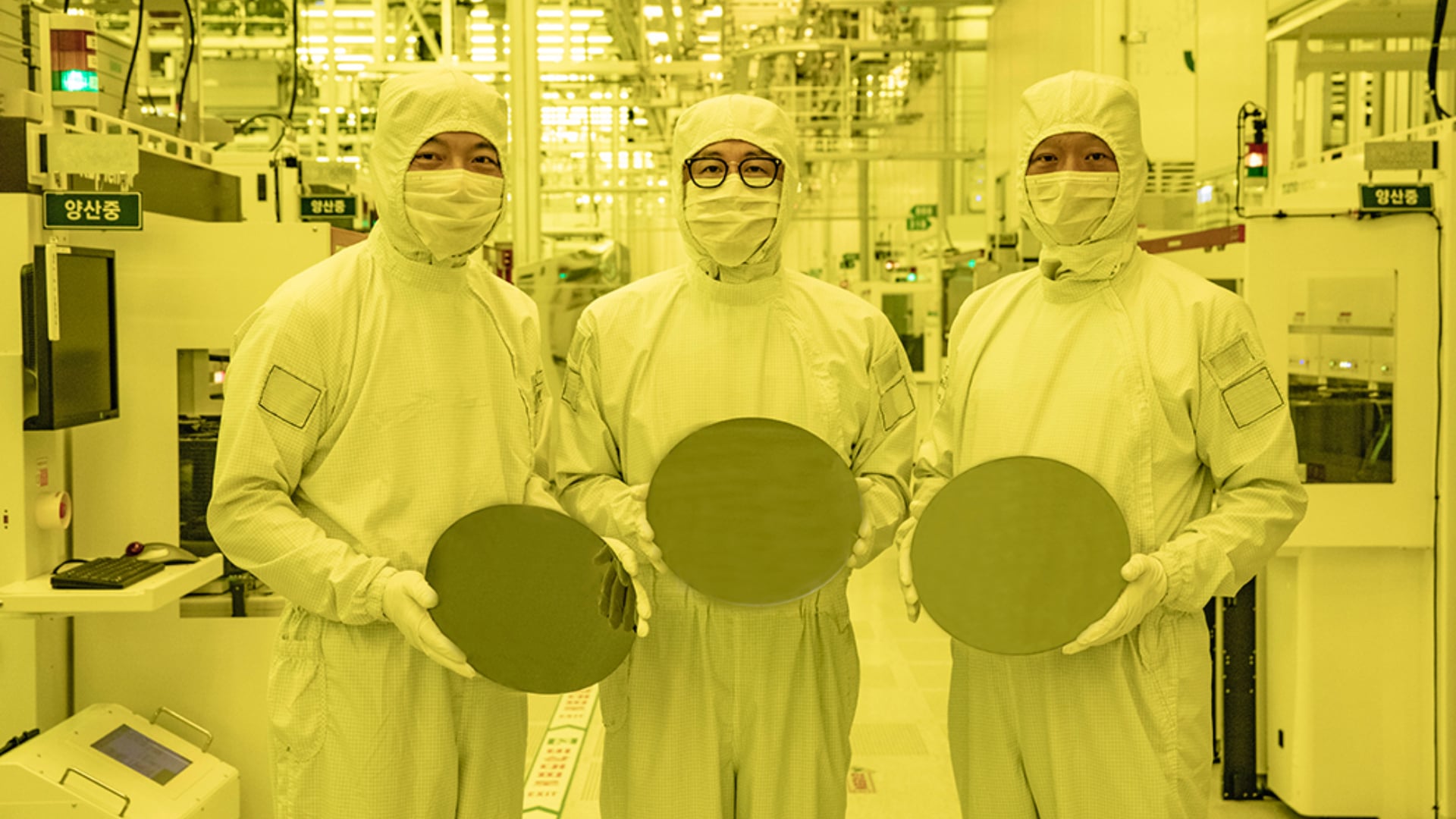
Samsung initiated mass production on its initial SF2 process last year. The industry anticipates that the first chips born from this node will be the Exynos 2600 processors. These are expected to be the heart of the upcoming Galaxy S26 series and the foldable Galaxy Z Flip 8, marking a transition to more efficient 2nm architectures for consumer electronics.
Efficiency Gains and Future Performance
Looking ahead to the end of this year, mass production for the second-generation SF2P process is expected to commence. Industry rumors suggest that the Exynos 2700 processor, likely powering the Galaxy S27 and S27+ in various regions, will utilize this node. Samsung has stated that the SF2P node provides a significant leap, offering roughly 26% better power efficiency than the standard SF2 node.
The third-generation 2nm process, known as SF2P+, is scheduled for the 2027-2028 window. This node is designed to push the boundaries of performance and energy management even further. By 2028, Samsung Foundry also intends to deploy the SF2X process, which is specifically engineered for the demanding needs of AI accelerators and server-grade hardware.
The Mystery of the Missing Nodes: SF2A and SF2Z
Interestingly, the SF2A process—initially announced in 2024 for the automotive sector—is notably absent from the most recent roadmap. SF2A was intended to provide the reliability needed for smart vehicles, capable of withstanding extreme vibrations and temperatures. It remains to be seen if this node has been re-prioritized or integrated into another category.
Similarly, the SF2Z node, which features the innovative Backside Power Delivery Network (BSPDN), was not mentioned during the recent SAFE Forum 2026 event. BSPDN is a revolutionary technology that moves power lines to the back of the silicon wafer, clearing space for signal routing and significantly improving transistor density and power efficiency. Whether SF2Z has been renamed or delayed is currently a topic of industry speculation.
As it stands, SF2P+ represents the pinnacle of Samsung’s announced mobile chip technology for the late 2027 era. If Samsung adheres to its historical release patterns, the Exynos 2800 could be the flagship processor to debut this highly advanced 2nm technology, potentially setting new benchmarks for the entire mobile industry.
When will the first Samsung 2nm chips be available?
The first generation of 2nm chips (SF2) began mass production last year and is expected to appear in devices like the Galaxy S26 series. More advanced versions, such as SF2P+, are slated for mass production starting in late 2027 or early 2028.
What makes the SF2P node better than the standard 2nm process?
Samsung claims the SF2P node offers up to a 26% improvement in power efficiency compared to the first-generation SF2 node, allowing for longer battery life and better thermal management in high-end smartphones.
What is Backside Power Delivery Network (BSPDN) technology?
BSPDN is a manufacturing technique that moves a chip's power lines to the back of the silicon wafer. This reduces interference, improves signal routing, and allows for higher transistor density and better overall performance.
Will these new 2nm chips be used for more than just smartphones?
Yes, Samsung is developing specialized nodes like the SF2X for high-performance computing (HPC) and AI accelerators used in servers and data centers, as well as previously announced nodes for the automotive industry.
🔎 Samsung's aggressive pursuit of 2nm technology demonstrates its commitment to leading the semiconductor industry through innovation and diversification. By developing specialized nodes for mobile, AI, and potentially automotive sectors, the company is ensuring that its foundry services remain essential for the next generation of technological breakthroughs. As mass production of these advanced chips approaches, the gap between theoretical performance and real-world efficiency is set to shrink, ushering in a new era of powerful, energy-efficient electronics.
Post a Comment