
Why the Galaxy S26 Ultra Privacy Display OLED Panel Cost Samsung More
Samsung introduced an innovative privacy feature with its latest flagship smartphone, but upgrading the screen hardware came with a heavy financial consequence. The advanced display technology utilized in the newly launched device significantly drove up manufacturing overheads, impacting profit margins for the company.
- ✨ Samsung's Galaxy S26 Ultra features a specialized privacy display that restricts off-axis viewing to enhance user security.
- ✨ The advanced OLED panel required for this technology costs between $88 and $96 per unit to manufacture.
- ✨ This price tag represents roughly a 9% to 10% increase compared to the panels used in the previous Galaxy S25 Ultra.
- ✨ Reports suggest Samsung may expand this expensive display technology to all incoming Galaxy S27 models next year.
The Cost Breakdown of Samsung Galaxy Ultra OLED Panels
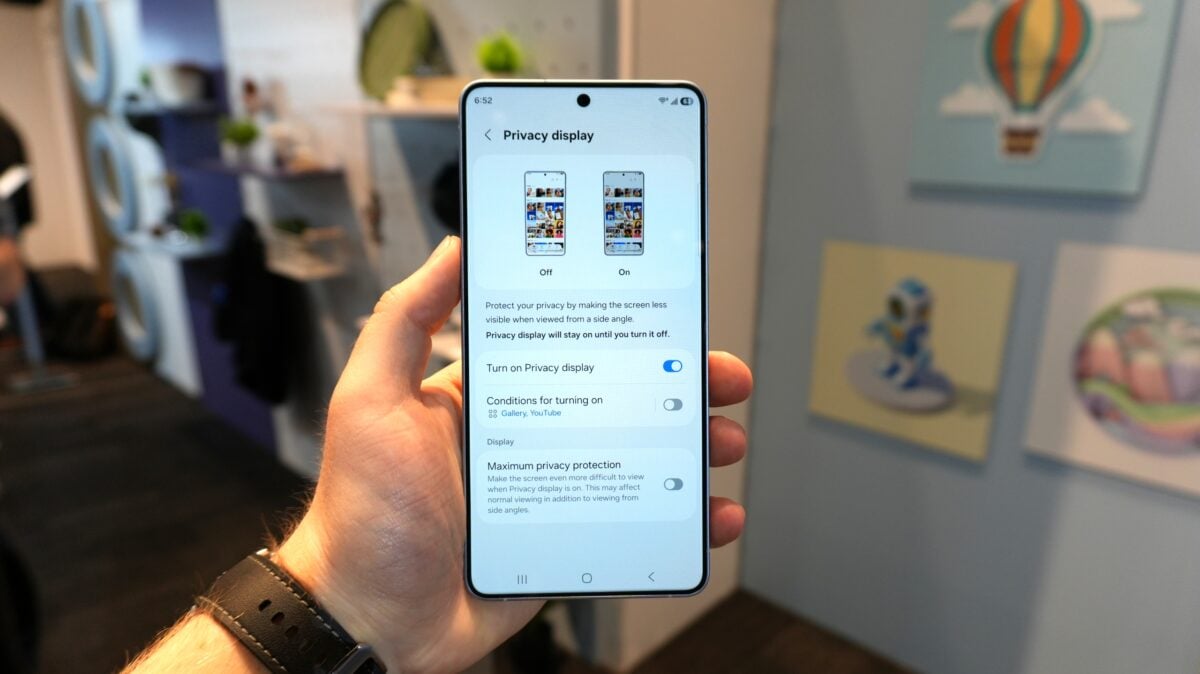
Samsung introduced the groundbreaking Privacy Display feature with the Galaxy S26 Ultra this year. It uses an advanced OLED panel that limits off-axis viewing angles, preventing people standing next to the user from seeing what is on the screen. However, this technology also comes with a higher price tag.
According to a report from Counterpoint Research (via ETNews), the OLED panel used in the Galaxy S26 Ultra costs Samsung between $88 and $96.
In comparison, the OLED panel on the Galaxy S23 Ultra cost $84, while the Galaxy S24 Ultra display cost $88. The OLED panel in the Galaxy S25 Ultra was estimated to cost between $84 and $88. As a result, the panel used in the Galaxy S26 Ultra is roughly 9% more expensive than the one in the Galaxy S25 Ultra.
| Smartphone Model | OLED Panel Cost |
|---|---|
| Galaxy S23 Ultra | $84 per OLED panel |
| Galaxy S24 Ultra | $88 per OLED panel |
| Galaxy S25 Ultra | $84-$88 per OLED panel |
| Galaxy S26 Ultra | $88-$96 per OLED panel |
Manufactured by Samsung Display, the Galaxy S26 Ultra's OLED panel, called Flex Magic Pixel, features two sets of RGB light emitters. One set provides a wide viewing angle, while the other offers a narrow viewing angle. The narrow-angle emitters use a multi-layer black matrix (BM) to block light emitted toward the sides.
When Privacy Display is activated, only the narrow-angle light emitters turn on, restricting side-angle visibility. Manufacturing these specialized pixels requires additional Thin Film Transistor (TFT) masks during the Color Filter on Encapsulation (CoE) process. This adds extra steps, such as deposition, etching, and photolithography, which ultimately increases overall production time and costs.
While Privacy Display is currently exclusive to the Galaxy S26 Ultra, reports indicate that Samsung will expand the feature to all four models in the Galaxy S27 series next year: the Galaxy S27, Galaxy S27+, Galaxy S27 Pro, and Galaxy S27 Ultra.
With RAM and storage prices already soaring (3x to 5x for LPDDR5X RAM and 1.2x to 2.2x for UFS 4.0 storage), the added cost of Privacy Display could push Galaxy S27 pricing to eye-watering levels.
What makes the Galaxy S26 Ultra privacy display so special?
The screen uses specialized Flex Magic Pixel technology with two sets of RGB light emitters, allowing users to limit side-angle visibility and prevent prying eyes from viewing sensitive content.
How much does the new OLED panel cost to manufacture?
Market intelligence reports estimate that the specialized OLED screen used on the Galaxy S26 Ultra costs between $88 and $96 per unit.
Will future Samsung phones feature this privacy technology?
Industry rumors suggest that Samsung plans to roll out the privacy display feature across all upcoming models within the Galaxy S27 series next year.
🔎 As mobile display technology continues to evolve toward advanced hardware-level privacy features, balancing manufacturing costs and retail pricing remains a significant hurdle for smartphone giants like Samsung. While consumers appreciate the added security of innovative display solutions, future hardware updates will likely influence device affordability across upcoming flagship generations.
Post a Comment