
Samsung Discloses New Technical Insights Into Eclipsa Audio, Its Direct Competitor to Dolby Atmos
Google and Samsung first introduced Eclipsa Audio to the public, marking a major milestone in open-standard spatial audio technology. Now, fresh details have emerged regarding the inner workings of this ambitious Dolby Atmos rival, highlighting how it aims to transform home entertainment through advanced multi-dimensional sound processing.
Key Takeaways
- ✨ Eclipsa Audio operates on the open-source IAMF standard, making it a royalty-free alternative to proprietary formats like Dolby Atmos.
- ✨ The spatial audio framework natively supports complex configurations like 5.1.2 and 7.1.4 channels while automatically scaling down to stereo on unsupported devices.
- ✨ Samsung successfully tested the technology during live concert streaming sessions on Samsung TV Plus to ensure seamless playback without synchronization issues.
- ✨ Future updates plan to bring granular user controls over audio layers, allowing listeners to isolate vocals or suppress ambient crowd noise.
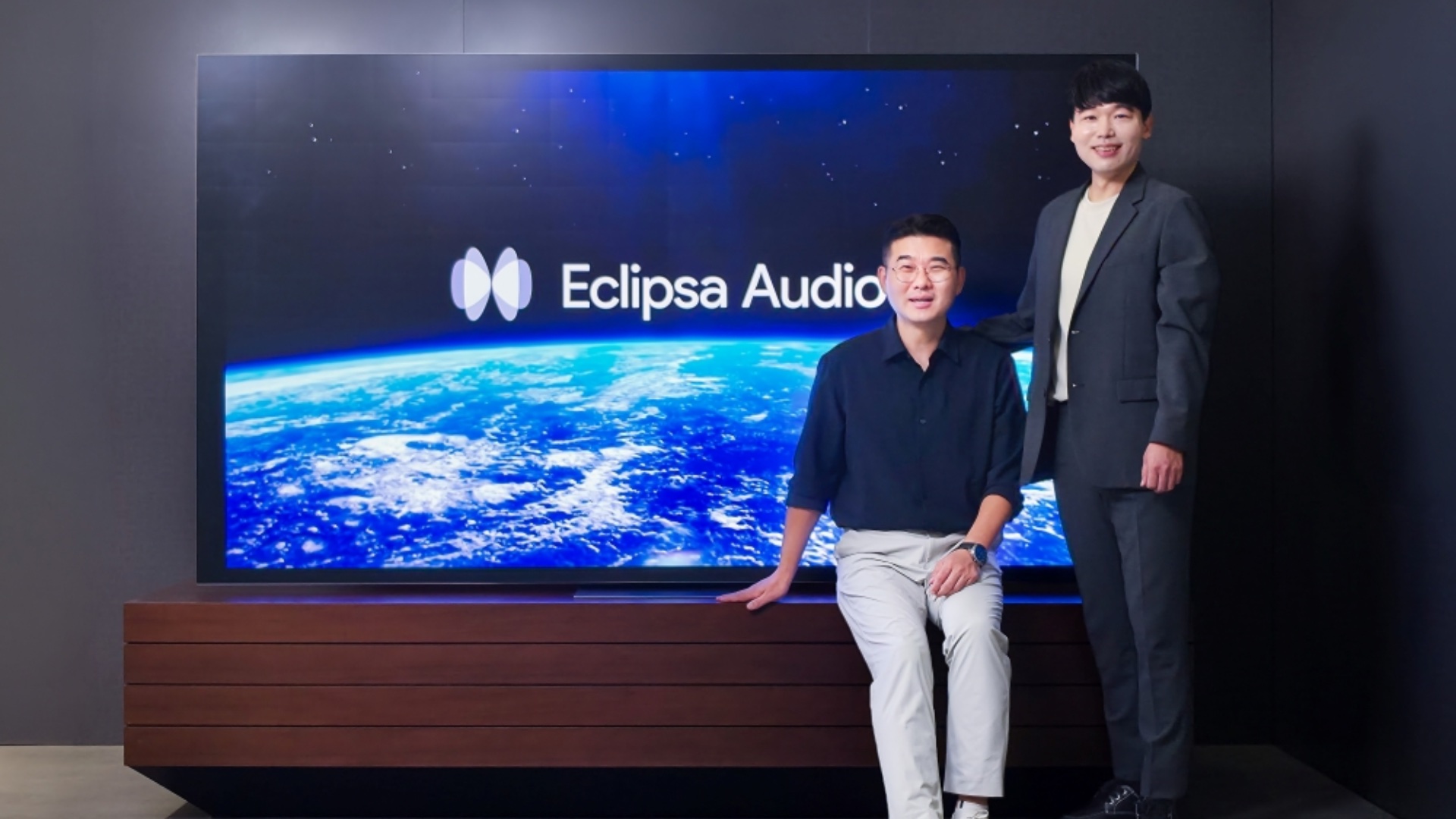
How Eclipsa Audio Functions as an Open-Standard Spatial Audio Solution
Co-developed by Google and Samsung, Eclipsa Audio is built upon the Immersive Audio Model and Formats (IAMF) specification overseen by the Alliance for Open Media (AOMedia). Both technology giants worked closely to establish the core engine, encoding pipeline, and spatial audio metadata framework.
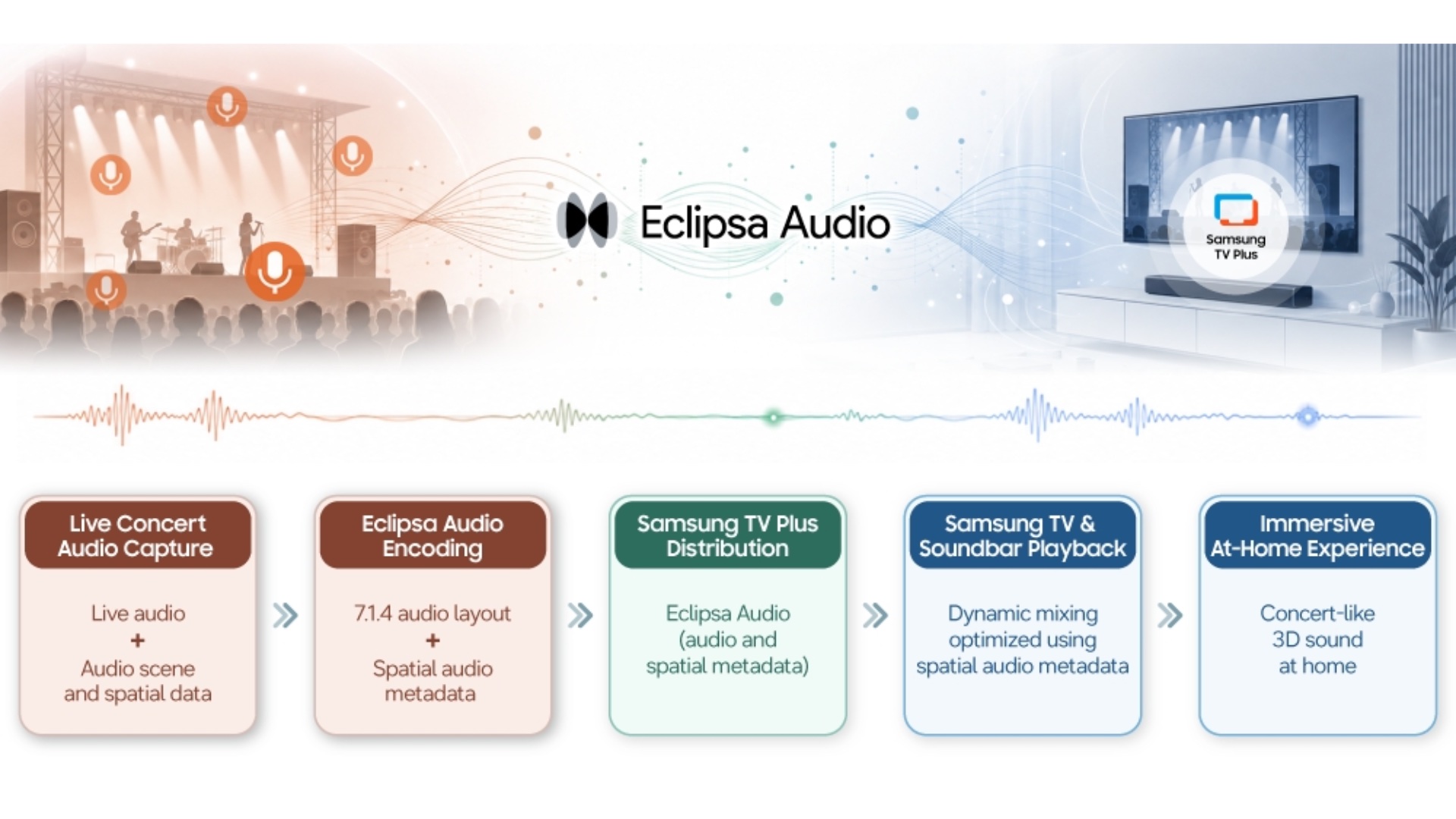
The system natively accommodates channel-based setups including 5.1.2 and 7.1.4 layouts. By utilizing specialized 3D metadata, sound elements are positioned accurately across height, depth, and horizontal planes. If played on legacy or unsupported hardware, the content seamlessly downmixes to standard stereo rather than throwing an error code.
Testing and Real-World Implementation on Samsung TV Plus
Ahead of its rollout on Samsung smart TVs, the company's Visual Display division rigorously evaluated the acoustics within a live 280-seat concert venue. Professional sound engineers assisted in verifying real-time audio capture, live stream encoding, and synchronized multi-device playback.
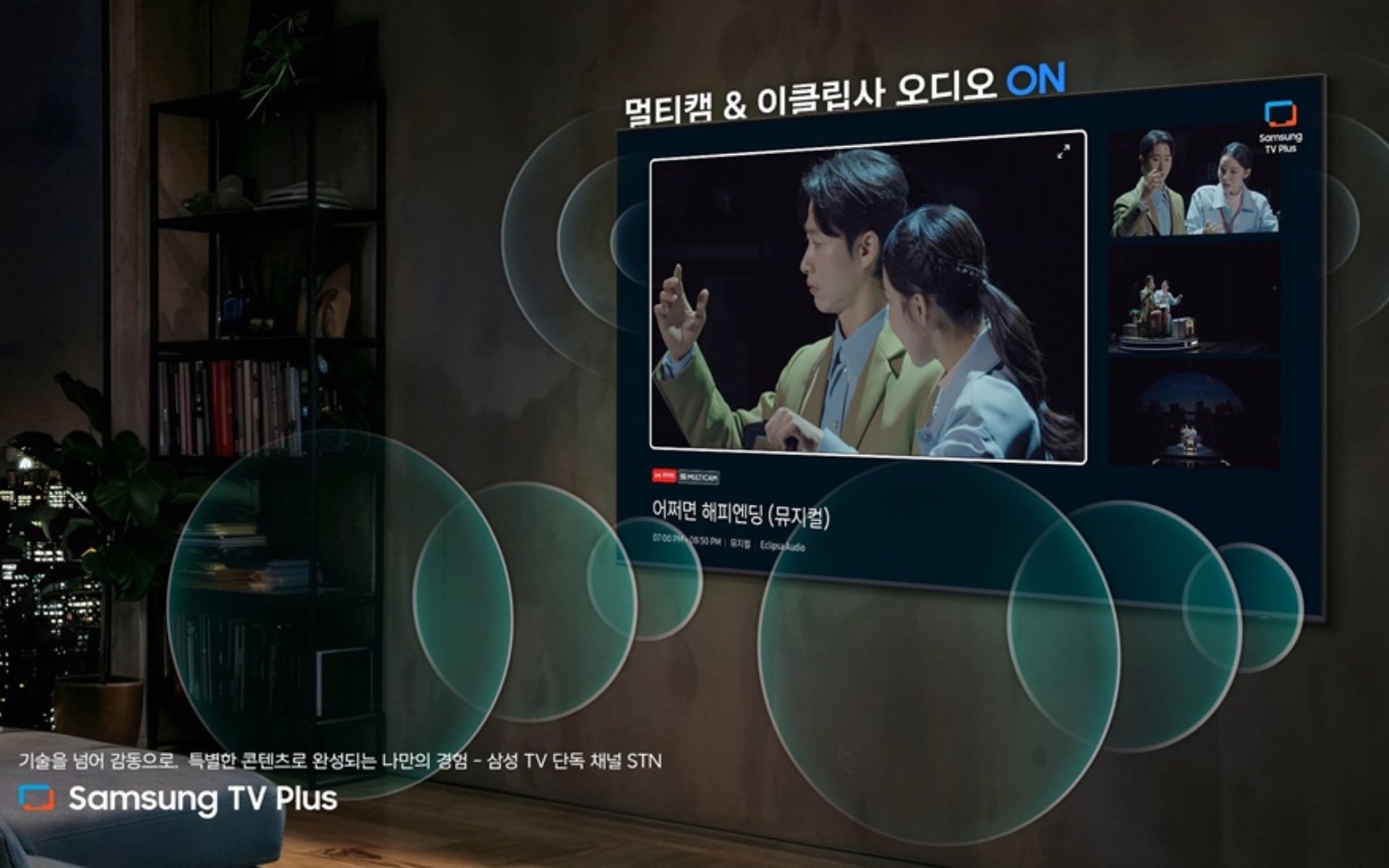
These tests verified that transitioning between immersive concert audio and regular stereo television advertisements occurs smoothly, avoiding common pitfalls like audio stuttering or lip-sync latency.
Future Expansion Plans for Movies, Sports, and Interactive Sound
Following successful trials with classical and K-pop concert streams, Samsung intends to expand Eclipsa Audio support into full-scale movie broadcasts, TV serials, and live sports events.
Long-term development roadmaps point toward empowering users with granular audio control. Listeners may soon be able to independently adjust specific audio streams—such as heightening dialogue clarity, turning down roaring stadium crowds, or boosting specific commentary tracks.
What makes Eclipsa Audio different from Dolby Atmos?
Unlike Dolby Atmos which relies on proprietary licensing models, Eclipsa Audio is built upon an open-source, royalty-free IAMF standard designed for broader industry compatibility.
Which hardware devices are supported by Eclipsa Audio?
The format is engineered to support a wide array of playback hardware, including modern Samsung soundbars, smart televisions, and upcoming mobile platforms like Android tablets and phones.
What happens if I play Eclipsa Audio content on an incompatible speaker?
When detected on unsupported hardware, the stream intelligently and gracefully falls back to traditional stereo sound instead of failing to play.
Where can users experience Eclipsa Audio right now?
Samsung has begun introducing initial Eclipsa Audio streaming experiences through specialized broadcasts on the Samsung TV Plus service.
🔎 Ultimately, Eclipsa Audio represents a massive collaborative step toward democratizing high-end immersive sound. By prioritizing an open standard over restrictive licensing, Samsung and Google are paving the way for universally accessible 3D audio across home theater systems and mobile devices alike.
Post a Comment