
Samsung Reaches Significant Milestone in Advanced AI Memory Chip Production
Samsung has officially surpassed a major manufacturing milestone for its cutting-edge sixth-generation high-bandwidth memory (HBM4) chips, marking a pivotal turning point in the highly competitive artificial intelligence server hardware market. Just months after initiating mass production, the tech giant has significantly improved its manufacturing stability and production profitability, positioning itself to aggressively challenge market leaders.
Key Takeaways
- ✨ Samsung's HBM4 production yield has successfully crossed the crucial 80% threshold, ensuring a stable, predictable, and profitable manufacturing process.
- ✨ The company is aggressively targeting a 38% market share in the global HBM space by the end of the year, with HBM4 projected to drive over 60% of its memory revenue.
- ✨ Development on the upcoming HBM4E memory standard is already underway, with Samsung aiming for a 70% yield prior to its commercial launch in early 2027.
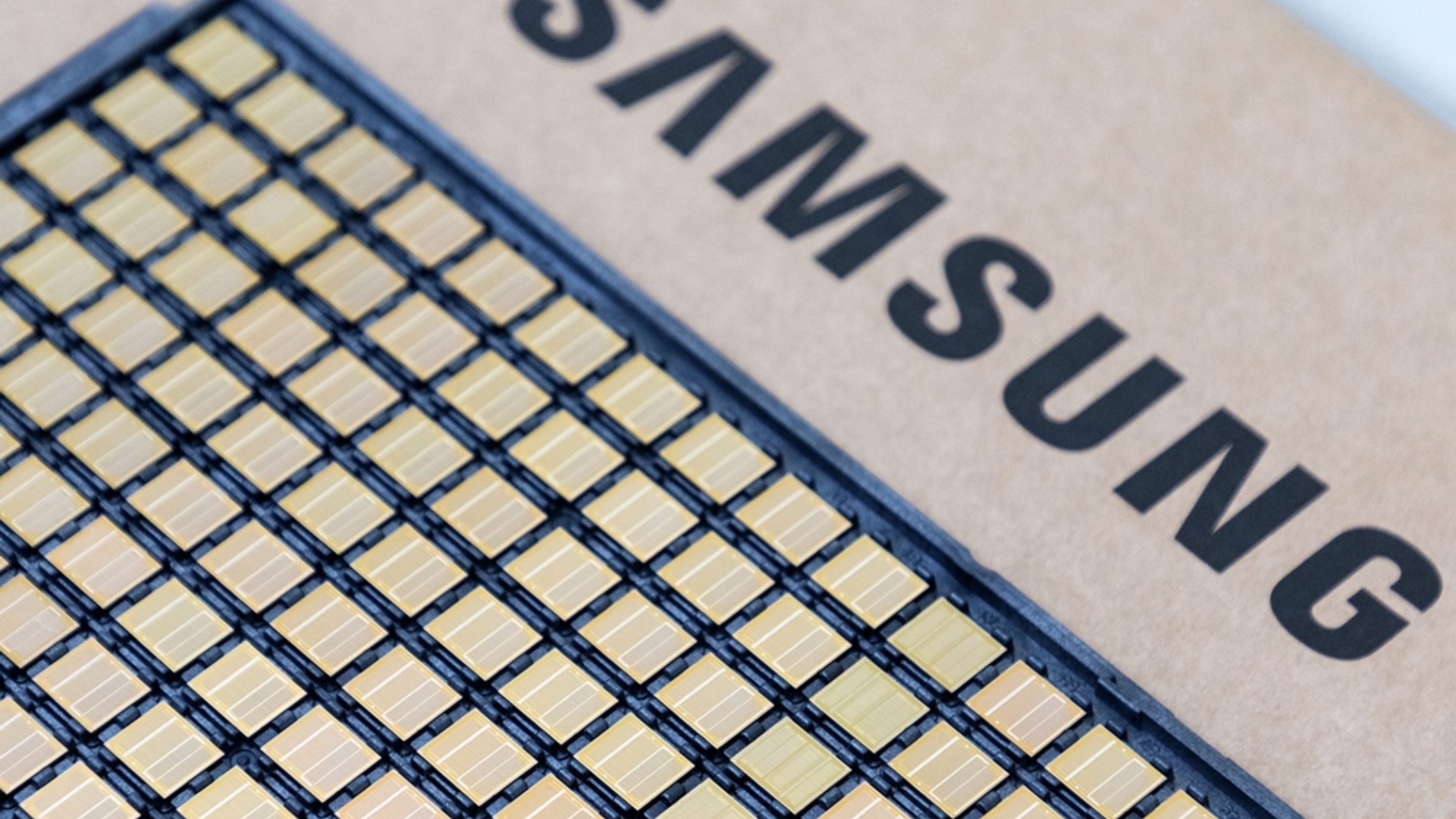
Samsung's most advanced memory chip for AI servers yet, HBM4, started shipping earlier this year. Now, just a few months after the mass production of these chips began, the South Korean firm has crossed a major milestone in its production.
Samsung's HBM4 Production Crosses the 80% Yield Milestone
According to a report from Seoul Economic Daily, Samsung has achieved an 80% yield in the production of its sixth-generation high-bandwidth memory (HBM4). Yield refers to the percentage of total chips that pass all quality control tests and are completely defect-free.
A yield of 80% or more is considered a "golden yield," as that is when the chip manufacturing process becomes predictable, profitable, and stable.
Back in February, when Samsung started mass-producing HBM4 chips and shipping them to customers, the yield was reportedly under 60%, which meant it was not very profitable for the company.
The South Korean firm reached an 80% yield within six months with the combination of a turnkey system across its foundry, memory, and packaging divisions. The company now competes with HBM market leader SK Hynix in terms of development as well as production capacity.
The report claims that Samsung is targeting a 38% market share in the HBM space by the end of this year. It also expects revenue from HBM4 chips to account for over 60% of its HBM revenue in the second half of this year.
Analysts expect Samsung to slightly surpass SK Hynix in HBM volume market share in 2027.
Samsung is also said to be improving the reliability of HBM4E chip production. It aims to reach a 70% yield ahead of its launch sometime in the first half of 2027.
What is HBM and Why is it Important for Samsung Memory?
High-bandwidth memory (HBM) is a specialized type of memory chip designed by stacking DRAM chips on top of each other to drastically increase data bandwidth and capacity, but designing and manufacturing it is extremely complicated. These chips are essential for AI accelerators made by companies like AMD, Google, and Nvidia.
Samsung is one of only three companies capable of making modern HBM chips, with the other two being Micron and SK Hynix.
Until last year, Samsung was struggling with issues in its HBM3 and HBM3E chips, which reportedly caused them to overheat and fail Nvidia's quality tests. However, the company worked hard on HBM4 chips and came back strong, reaching the industry's highest performance levels.
With the ongoing AI boom, there is a severe shortage of HBM chips worldwide, and the production capacity of all three HBM suppliers for 2027 is already fully booked.
If Samsung continues this stellar performance, it could earn at least $30 billion in profit from HBM chip sales in 2027.
What does an 80% production yield mean for Samsung?
An 80% yield means that 80% of the manufactured HBM4 chips successfully pass all quality control checks completely defect-free. In the semiconductor industry, this milestone is known as a "golden yield," signaling that mass production has achieved commercial stability and high profitability.
How quickly did Samsung improve its HBM4 production rates?
Samsung managed to scale its production yield from under 60% at the initial launch in February up to the 80% milestone within a span of just six months.
Which companies rely on Samsung's high-bandwidth memory chips?
Samsung's specialized high-bandwidth memory chips are critical components for advanced AI hardware and accelerators produced by major technology leaders including Nvidia, Google, and AMD.
What are Samsung's future plans for next-generation memory chips?
Building on its current success, Samsung is actively working on the production reliability of HBM4E memory chips, targeting a 70% yield prior to their commercial release scheduled for the first half of 2027.
🔎 Ultimately, Samsung's rapid turnaround and successful optimization of its HBM4 manufacturing line highlight its resilience and technical capability in the competitive semiconductor space. By overcoming previous design bottlenecks and achieving a stable golden yield, the corporation has cemented its status as an indispensable pillar of the global artificial intelligence infrastructure, paving the way for record-breaking financial growth and market leadership in the years ahead.
Post a Comment