
Samsung Introduces Groundbreaking 10,000-Nit OLED Smartphone Display
Article Summary: Samsung Display has officially revealed its cutting-edge M16 OLED panel, setting a new industry record with an astonishing peak brightness of 10,000 nits. Packed with advanced features like LTPO refresh technology and improved energy efficiency, this high-performance screen is poised to power next-generation mobile devices.
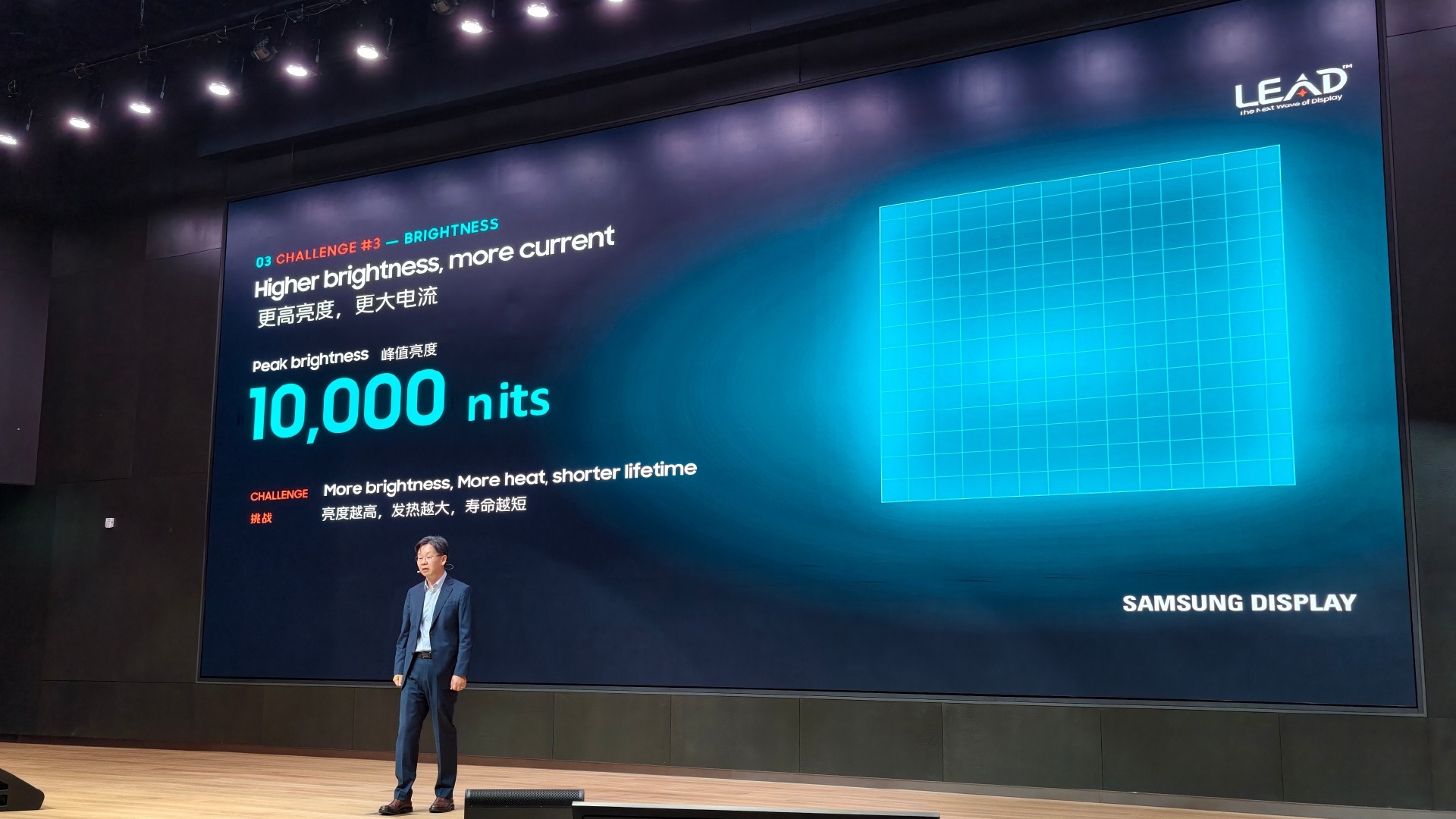
Samsung Display has officially taken the wraps off its most advanced OLED screen designed specifically for smartphones. Utilizing cutting-edge M16 OLED material, this state-of-the-art panel is capable of achieving an incredible peak brightness of up to 10,000 nits. Although developed by Samsung, the display has made its commercial debut inside Apple’s newly released lineup and the rather than Samsung's own mobile devices.
- ✨ Samsung Display's newly announced M16 OLED smartphone panel achieves an unprecedented peak brightness of 10,000 nits.
- ✨ The display integrates WQHD resolution, flexible LTPO refresh rates ranging from 1Hz to 165Hz, and delivers up to 30% better power efficiency than its predecessor.
- ✨ While currently featured in Apple's newest hardware, the screen is slated to arrive in the Android ecosystem via the iQOO 16 and future Galaxy flagships.
The Technology Behind the M16 OLED Panel
Within the Android ecosystem, these advanced Samsung Display panels are set to make their initial appearance in the iQOO 16. Industry reports also strongly point toward their integration into upcoming flagship models like the Galaxy S27 Pro and the Galaxy S27 Ultra early next year.
Details regarding the M16 OLED panel were formally shared during the iQOO 16 launch event in China. Part of Samsung Display's LEAD 2.0 portfolio, the screen supports a sharp WQHD resolution of 2,560 x 1,440 pixels, advanced LTPO technology for an adaptive 1Hz to 165Hz refresh rate, up to 2,800 nits of global peak brightness, and extensive 1.24x DCI-P3 color gamut coverage.
Additional specifications of this breakthrough display include 3,300Hz pulse-width modulation (PWM) dimming, a responsive 5,000Hz touch sampling rate, an effective anti-reflective coating, a polarizer-free on-cell film design, and a significant reduction in power consumption by up to 30% compared to previous generations.
Earlier speculations suggested that Google might incorporate M16 panels into the Pixel 11 series. However, today's official confirmation clarifies that the Pixel 11 lineup relies on an older generation of OLED technology from Samsung Display.
What is the maximum peak brightness of the new M16 OLED screen?
The newly unveiled Samsung Display M16 OLED panel can achieve an eye-blinding peak brightness of up to 10,000 nits.
Which smartphones are using this display first?
The screen debuted in Apple's latest iPhone 18 Pro series and iPhone Duo, while the iQOO 16 brings it to the Android market, with future Galaxy S27 models expected to follow.
What are the key performance improvements of the M16 OLED panel?
Aside from extreme brightness, it features a WQHD resolution, LTPO variable refresh rates up to 165Hz, a polarizer-free design, and up to 30% lower power consumption than older panels.
🔎 Ultimately, Samsung Display's introduction of the 10,000-nit M16 OLED screen marks a monumental leap forward in mobile display engineering, promising users unmatched visual clarity, superior energy efficiency, and groundbreaking brightness levels across upcoming flagship devices.
Post a Comment