
Understanding the Screen Sinking Issue on the Galaxy Z Fold 8: Samsung's Official Statement
TL;DR
- ✨ Samsung clarifies that minor inner screen corner sinking on the Galaxy Z Fold 8 and Fold 8 Ultra is caused by a specialized cushioning structure.
- ✨ This indentation is a deliberate design choice built for enhanced durability and shock absorption rather than a manufacturing defect.
- ✨ Users who remain concerned can take their device to an authorized service center for an expert physical assessment.
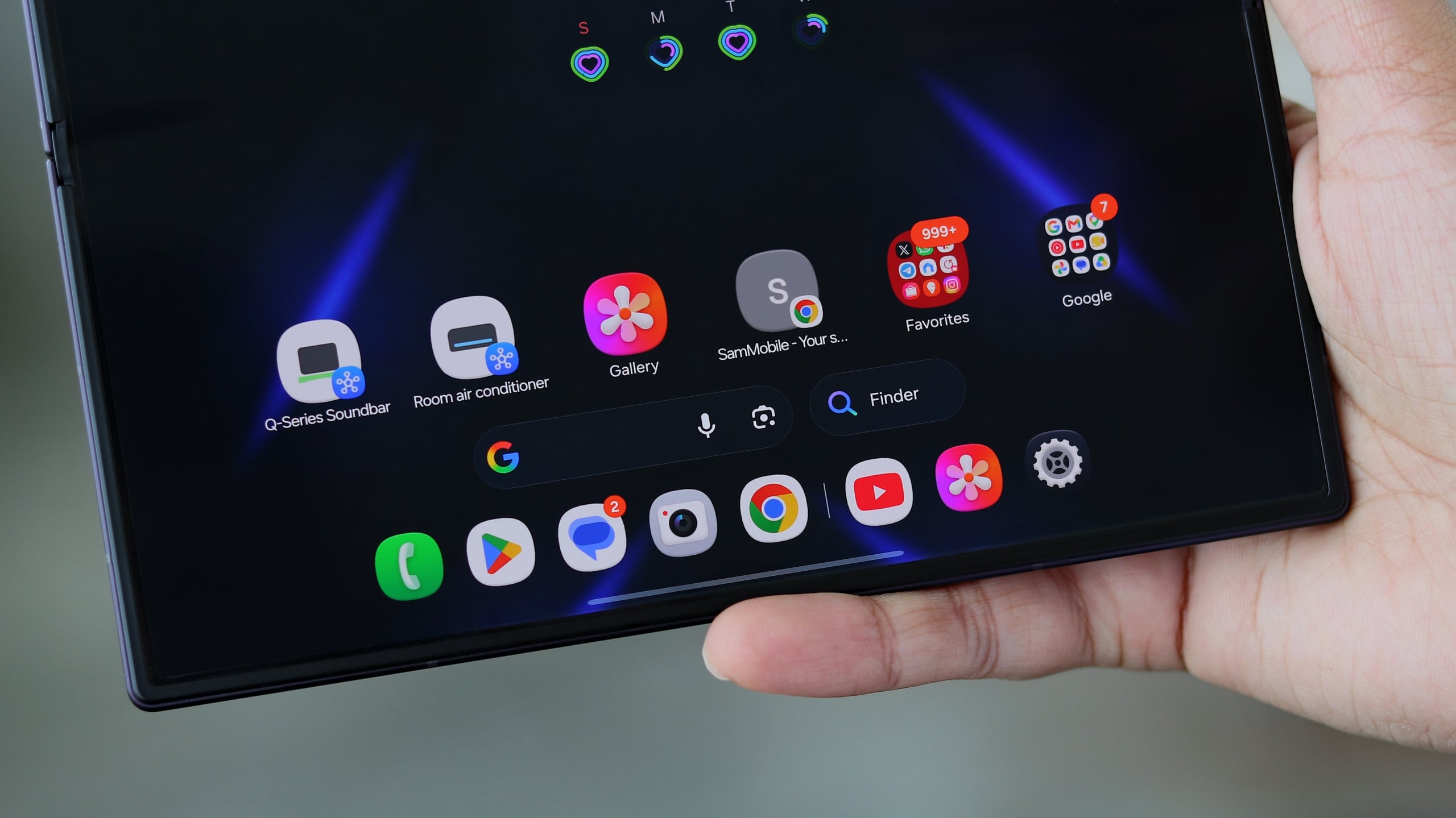
While the Galaxy Z Fold 8 series has garnered an overwhelmingly positive response from consumers worldwide, a few early adopters have pointed out an unusual characteristic with Samsung's newest folding devices. Specifically, a handful of users noticed that the main flexible screen depresses slightly when pressure is applied near the corners, prompting concerns about potential quality control issues or manufacturing flaws.
Samsung Explains the Cushioning Structure Behind Corner Depressions
Addressing these growing consumer inquiries, official representatives from Samsung have stepped forward to provide clarity regarding the inner display behavior. According to the company, the foldable panels utilized on both the standard Galaxy Z Fold 8 and the premium Galaxy Z Fold 8 Ultra incorporate an engineered cushioning structure positioned specifically around the outer corners. This architectural choice is intentionally implemented to maximize overall device durability and protect delicate layers from daily wear and tear. Consequently, when direct pressure is applied to these exact zones, the screen gives way very slightly.
This specialized support system is deliberately engineered to mitigate the impact of internal mechanical interference and pressure between underlying display components. To ensure this protective mechanism functions correctly, the surrounding area is designed with microscopic clearance, which naturally permits minor movement whenever specific regions of the panel receive light finger pressure.
The technology giant emphasized that this behavior is completely normal, serving as an intentional structural safeguard to shield the display and prolong its functional lifespan. It has zero negative impact on overall product performance, touch responsiveness, or display quality. Because this is a standard design aspect instead of a hardware defect, Samsung reassures owners that they can continue operating their Galaxy Z Fold 8 and Galaxy Z Fold 8 Ultra with absolute confidence.
Nevertheless, for individuals who remain uneasy about their hardware or wish to verify the integrity of their device, Samsung offers professional diagnostic support. Customers can easily schedule an appointment or drop by a nearby authorized service center, where trained engineers can conduct a comprehensive physical evaluation.
Is the screen corner sinking on the Galaxy Z Fold 8 a manufacturing defect?
No, Samsung has officially clarified that the minor sinking at the corners of the main screen is an intentional design feature rather than a quality defect.
Why do the corners of the foldable display depress when pressed?
The inner screen incorporates a specialized cushioning structure and extra clearance around theouter corners to absorb pressure and protect internal components from interference.
Does this structural movement affect the performance of the phone?
Not at all. The design is intended to enhance long-term durability without altering display performance, touch sensitivity, or everyday functionality.
What should I do if I am still worried about my device's screen?
If you are concerned or want a precise diagnosis, you can visit an authorized Samsung service center where technicians can perform a physical inspection.
🔎 Ultimately, Samsung's transparent response highlights the meticulous engineering required to build reliable foldable smartphones. While physical quirks like corner give might initially alarm users, understanding that these traits are built for protection helps reinforce confidence in modern foldable technology and its long-term viability.
Post a Comment