
Why Apple's Siri AI Delays Validate Samsung's Multi-AI Strategy
Apple devoted a significant portion of its recent launch event for the iPhone 18 series and the iPhone Duo to highlighting the capabilities of its brand-new Siri AI experience. However, despite its impressive enhancements, the rollout comes with notable restrictions that ultimately vindicate Samsung's more flexible and fragmented approach to mobile artificial intelligence.
Quick Summary (TL;DR):
- ✨ Apple’s Siri AI launch is currently restricted to English and delayed across parts of the EU and mainland China.
- ✨ Regulatory hurdles stem largely from Apple's reluctance to grant rival voice assistants the same deep system access that Siri enjoys.
- ✨ Samsung's multi-AI approach trades a singular vision for near-universal availability and immediate global deployment.
Apple's Siri AI Rollout Leaves Key Global Markets Waiting
The majority of core Siri AI features are only available in English at launch, and they will not roll out initially across all 27 European Union member states. Advanced tools like Audio Intelligence, Live Rewind, and Siri Recap are stuck in limbo without any firm timeline for arrival. Consequently, European consumers paying full price for flagship Apple devices cannot fully access the advanced AI capabilities advertised.
These limitations extend far beyond Europe. Siri AI remains completely unsupported for users with an Apple Account based in mainland China, representing a massive missed opportunity in one of the world's most lucrative consumer tech markets. For a flagship device line intended to redefine Apple's market dominance—such as the iPhone Duo—launching without essential software features in major regions puts buyers at a distinct disadvantage.
These delays are not due to a lack of effort from Apple, but rather regulatory friction. EU digital markets regulations mandate that competing voice assistants must receive the same deep-level device permissions as Siri—a requirement Apple resists. Refusing to open up its software architecture means Apple simply cannot provide a rollout date for the EU region.
Why Samsung's Open Approach to Galaxy AI Wins
By contrast, Samsung has consistently embraced a flexible, open architecture for Galaxy AI on its mobile ecosystem. Instead of restricting capabilities to maintain absolute control over every layer of the user experience, Samsung relies on collaborative partnerships.
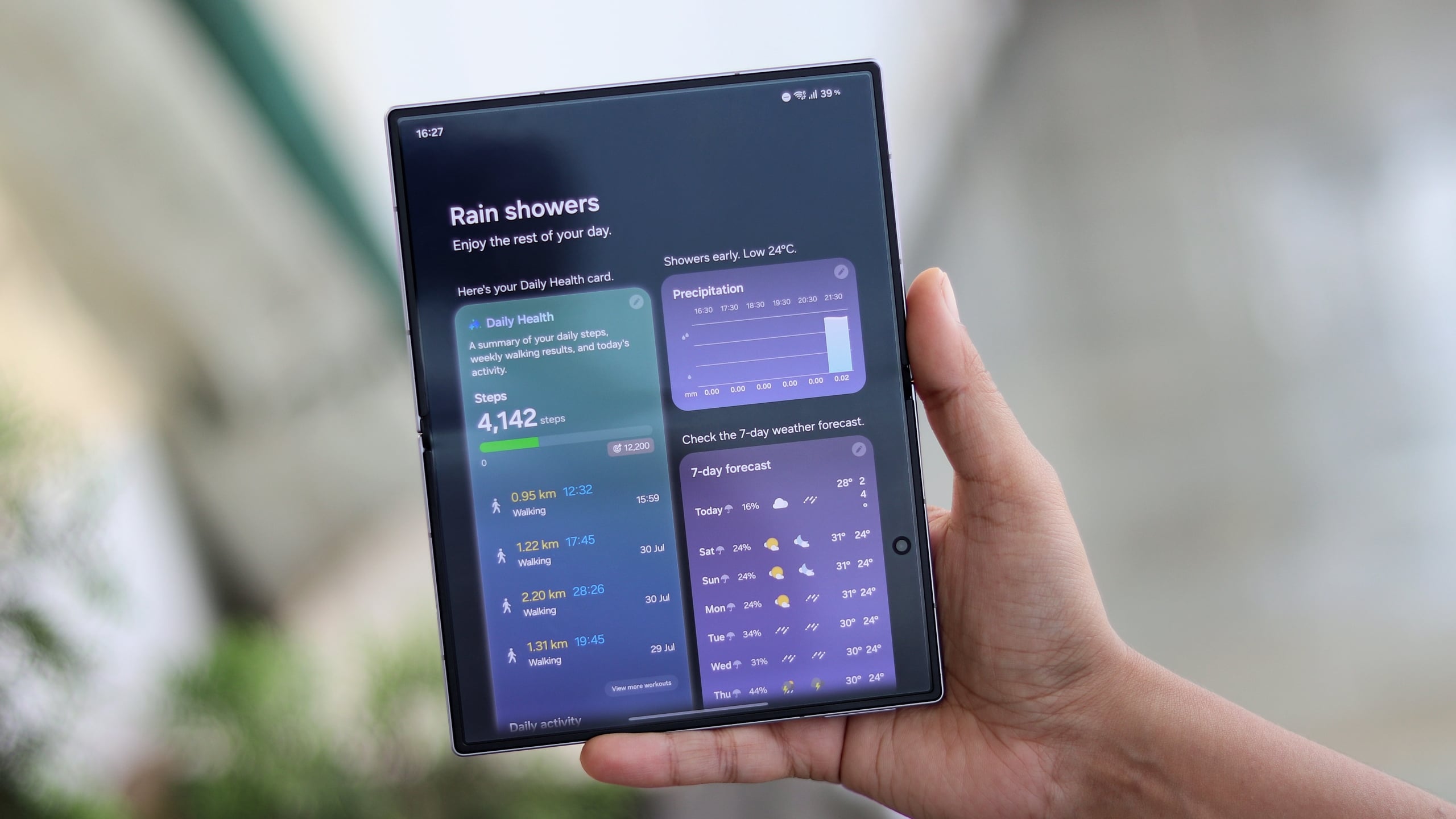
Google's Gemini powers much of the heavy lifting within Galaxy AI, while Samsung's proprietary on-device models serve supporting functions, and integrations like Perplexity enhance Bixby's overall performance. While critics often argue this multi-provider setup lacks the polished, singular design vision of Apple, it achieves something Siri AI cannot claim: immediate, near-universal global availability, supplemented by local partnerships in regions like China.
While Samsung's initial adoption of a multi-AI strategy may have stemmed from necessity rather than a grand design, the outcome speaks for itself. It has delivered a globally deployable architecture that ensures users worldwide receive an equally rich feature set.
Galaxy Z Fold 8 vs iPhone Duo: The $2,000 Dilemma
When evaluating pure mobile AI functionality, the Galaxy Z Fold 8 launched globally as a complete, fully realized package, whereas the iPhone Duo arrived constrained by regional software blocks. For consumers investing top dollar, this stark contrast dictates purchasing behavior.
With both advanced devices commanding prices near $2,000, buyers face a definitive choice: purchase a fully functional AI-driven device today, or pay a premium price for a future promise with no guaranteed timeline.
Why are Apple's new Siri AI features delayed in certain regions?
Apple's AI rollout is delayed in regions like the European Union due to strict local regulations requiring third-party assistants to have equal, deep system access—a condition Apple is currently unwilling to fulfill.
Is Siri AI available in languages other than English at launch?
No, the core features of Siri AI are initially restricted to the English language, leaving international users waiting for broader language support.
How does Samsung's AI strategy differ from Apple's approach?
Samsung utilizes a multi-AI framework, integrating technologies from partners like Google and Perplexity alongside its own models to ensure rapid, worldwide availability without heavy regional restrictions.
Can users in mainland China access Siri AI features?
Currently, Siri AI does not function for Apple Accounts based in mainland China due to regulatory and deployment constraints.
What advantages does Samsung's Galaxy AI offer over competitors?
Galaxy AI offers near-universal global availability and immediate access to advanced features right out of the box, avoiding the regional software fragmentation seen on competing platforms.
🔎 Ultimately, the software limitations facing Apple's ecosystem highlight the practical strengths of a flexible, partnership-driven AI rollout, proving that hardware excellence must be matched by immediate, worldwide software availability to truly satisfy high-end consumers.
Post a Comment