
Foldable Software Face-Off: Samsung Galaxy Z Fold 8 vs. Apple iPhone Duo
Article Summary:
Apple's debut foldable, the iPhone Duo, brings interesting software concepts, but its limitations become glaringly obvious when stacked against the mature ecosystem of the Galaxy Z Fold 8.
Introduction to the Foldable Operating System War
Samsung has spent seven years refining foldable hardware and software. Meanwhile, Apple is taking its first major swing with the iPhone Duo. Comparing the two devices uncovers starkly different philosophies on how a folding smartphone should actually function in daily life.
- ✨ Samsung provides comprehensive layout control, advanced multitasking, and customizable closing behaviors.
- ✨ Apple relies on a simpler approach, which can sometimes render the larger inner display less useful than intended.
- ✨ The absence of native Flex Mode on the Galaxy Z Fold 8 remains a frustrating oversight.
- ✨ Samsung’s extensive multi-year head start in foldable software engineering clearly shows throughout the experience.
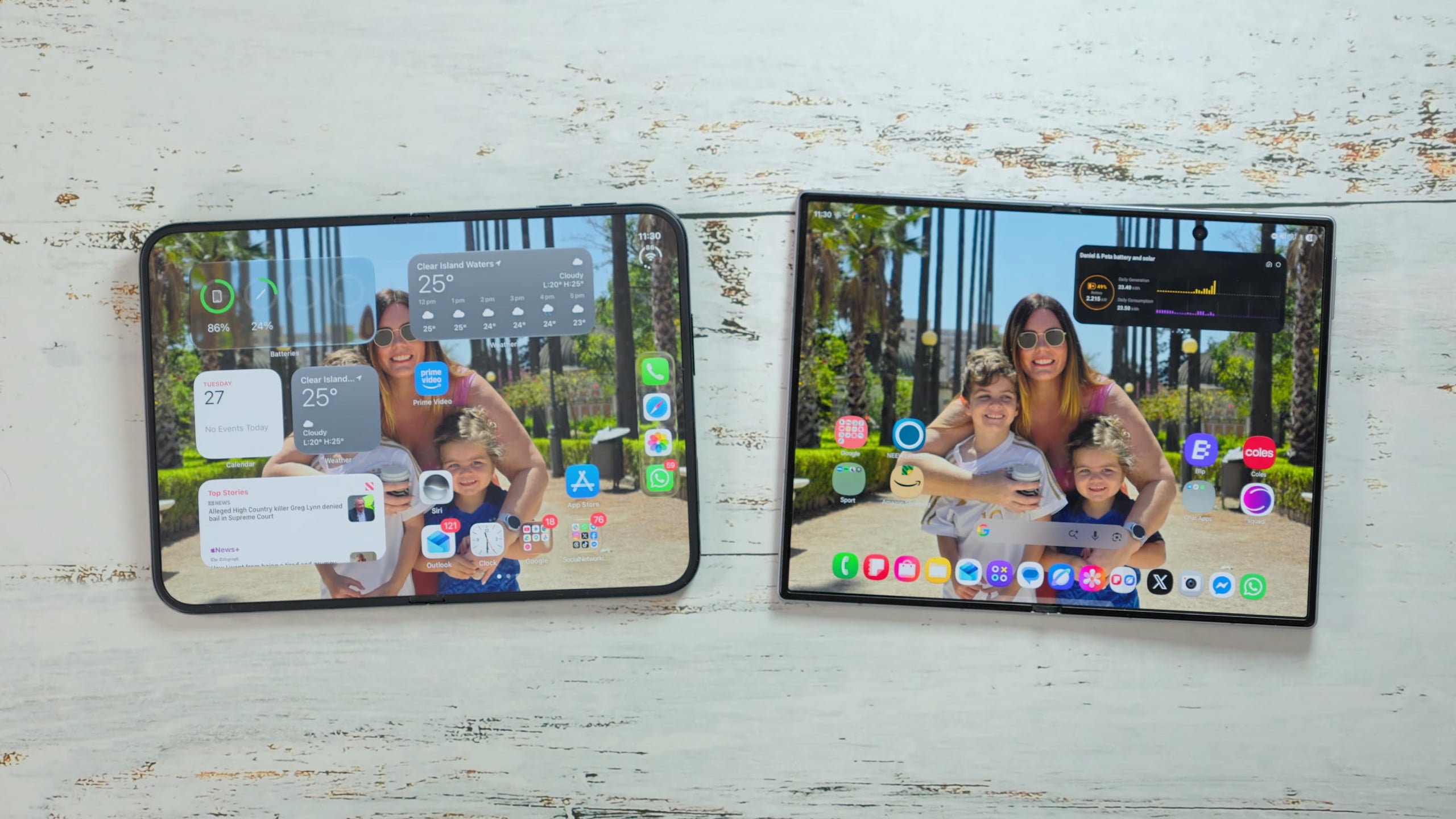
Customizing Independent Screen Layouts
Testing the iPhone Duo reveals some friction, starting with biometric unlocking. Apple introduces an enforced delay between pressing the power button and unlocking, giving users time to view notifications on the lock screen—a delay that cannot be disabled.
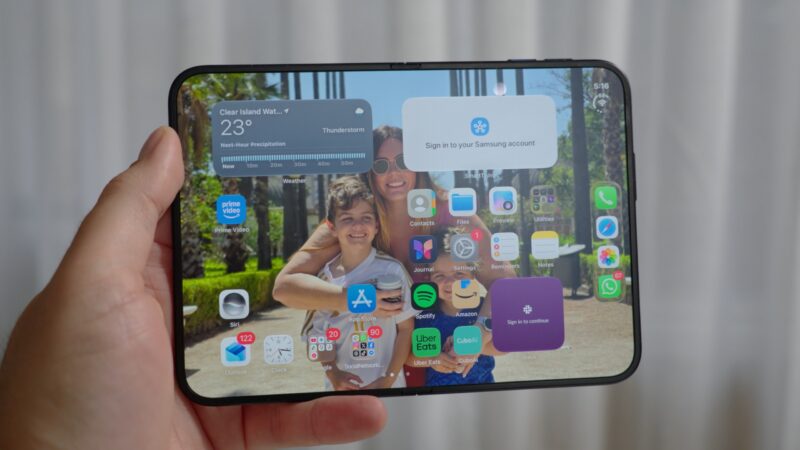
Beyond the lock screen, the home screen setup offers little flexibility. The layout on the cover screen is permanently mirrored onto the inner display. You cannot configure separate arrangements for each screen, despite using them for entirely different tasks.
Apple also restricts each home screen row to four app icons, with a four-app dock limit that cannot be altered.
In contrast, the Galaxy Z Fold 8 gives users total freedom. You can enable cover screen mirroring for uniformity or turn it off to arrange each display independently.
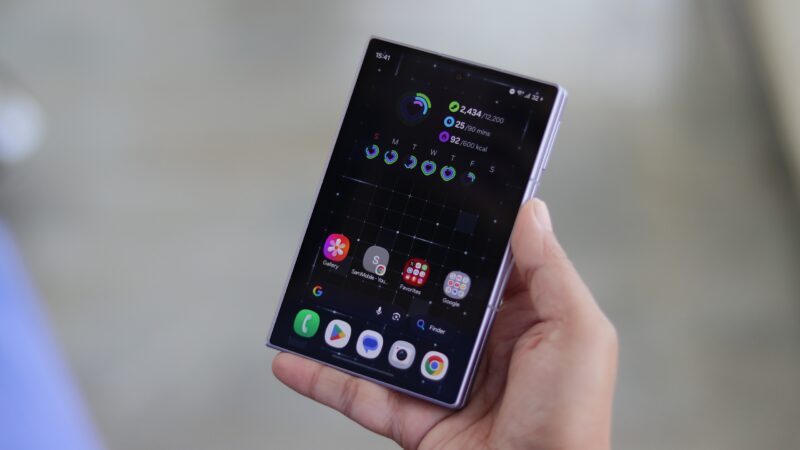
Samsung’s native settings and the Good Lock Home Up module allow precise adjustments to grid density, dock capacity, and taskbar layout. While mirroring suits some users, Samsung's primary advantage is that the choice belongs entirely to you.
Taskbar Accessibility and Workflow
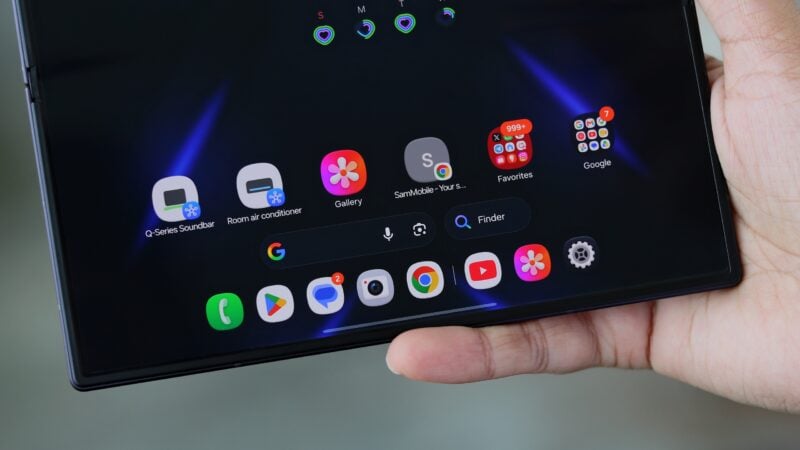
The taskbar on the Galaxy Z Fold 8 transforms the inner display into a tablet-like powerhouse. It remains accessible over active applications, letting you switch apps or initiate split-screen multitasking instantly without returning to the home screen.
The iPhone Duo places its dock on the right side of the unfolded display. However, launching an application causes the dock to vanish immediately. Because it cannot be summoned over active apps, launching shortcuts requires heading back to the home screen—diminishing its utility on a large canvas.
Multitasking Restrictions on the iPhone Duo
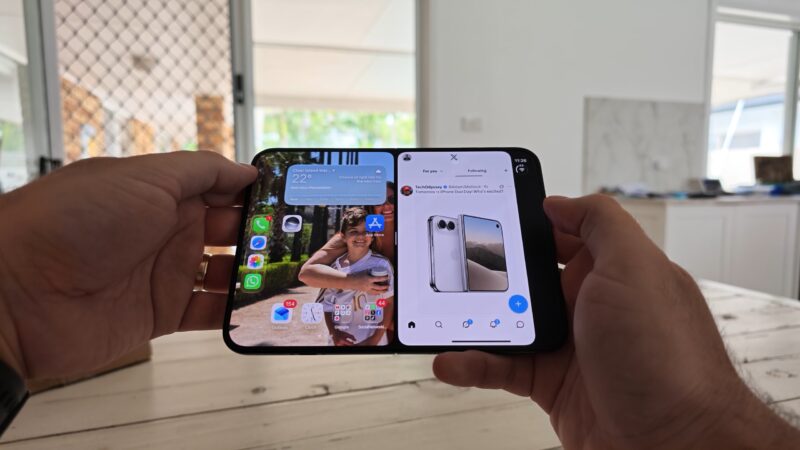
Running two apps side-by-side on the Duo is straightforward, but rigid limits quickly appear. Testing apps like X and Notes together revealed that split ratios cannot be adjusted; dragging the central divider snaps it right back to a strict 50/50 split.
Furthermore, rotating the device into portrait orientation causes the split-screen layout to collapse entirely rather than adapt. Apple provides a basic two-app template with virtually no advanced productivity controls.
Advanced Multitasking on the Galaxy Z Fold 8
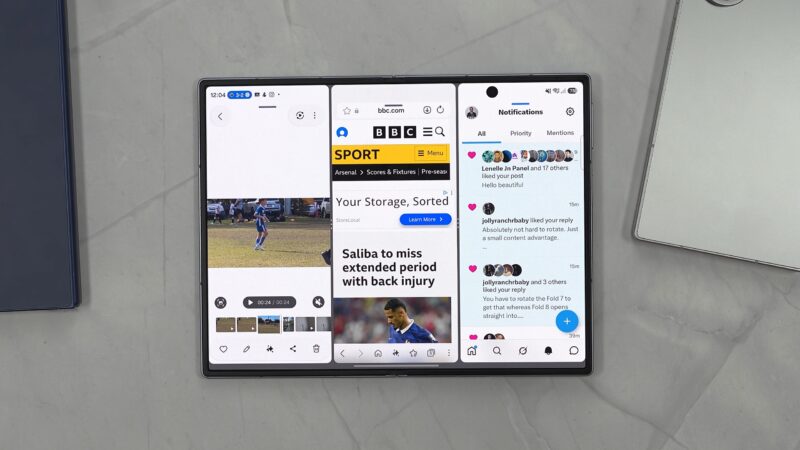
Samsung approaches multitasking with immense versatility. Found under Advanced features in settings, Labs allows Multi Window execution for non-optimized applications.
The Galaxy Z Fold 8 supports three active apps simultaneously with adjustable window dividers, plus a fourth app running in a floating pop-up window.
Rotating the phone preserves your active arrangement, and tools like Good Lock's MultiStar enable advanced features like simultaneous dual-video playback. Paired with Samsung DeX, the Z Fold 8 functions as a true desktop workspace.
Flex Mode Challenges Across Both Ecosystems
Samsung's software advantage hits a snag here, as the standard Galaxy Z Fold 8 lacks native Flex Mode support.
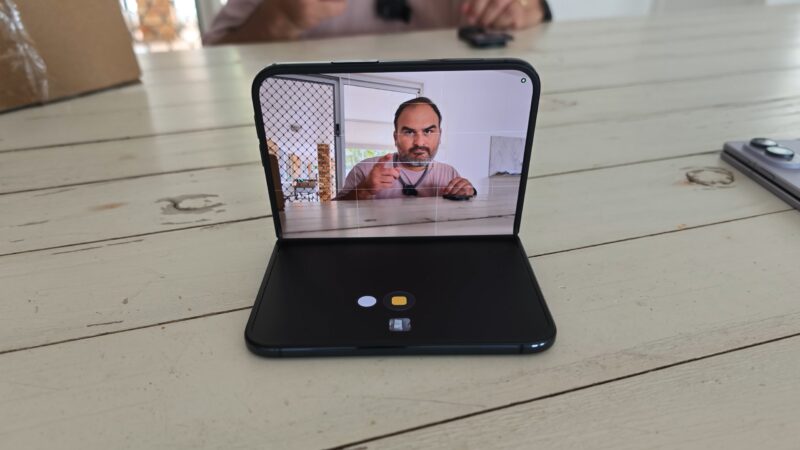
While the physical hinge holds the phone at various angles, opening media apps like Netflix doesn't automatically split controls onto the bottom half of the screen.
The iPhone Duo officially supports half-folded layouts, but its behavior during testing proved erratic. Minor adjustments to the folding angle often triggered an accidental switch to the cover screen, forcing users to reopen and restart their tasks.
App Continuity When Closing the Phone
Apple implements a smooth, glass-like transition animation when moving apps between the cover and inner displays. However, users lack system-level control over what happens when the device closes.
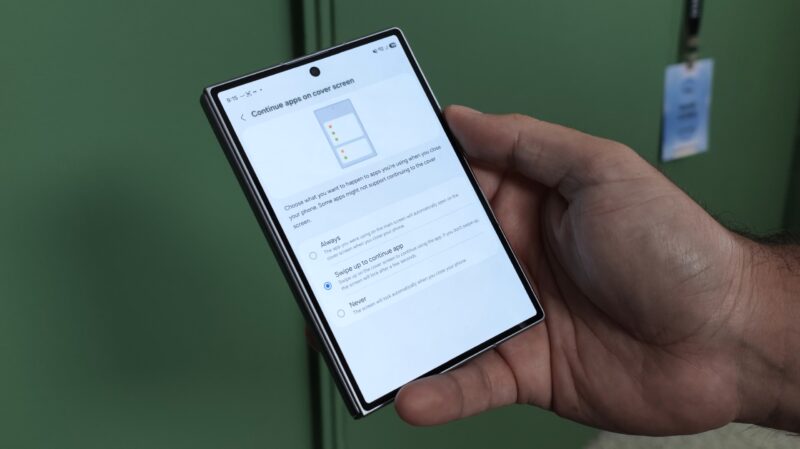
Samsung tackles this effortlessly through a dedicated display menu offering three clear behaviors:
- ✨ Always: Keep using the app on the cover screen after closing the phone.
- ✨ Swipe up to continue: Close the phone, then swipe up on the cover screen if you want to resume the app.
- ✨ Never: Closing the phone ends the interaction and locks it.
Summary of the Foldable Software Experience
The iPhone Duo offers a familiar entry point for Apple users venturing into foldables. Yet, when compared directly with the Galaxy Z Fold 8, its software restrictions become glaringly apparent. Independent screen grids, flexible multitasking, and robust continuity make Samsung’s foldable ecosystem significantly more productive.
Can the iPhone Duo run three apps simultaneously like the Galaxy Z Fold 8?
No, the iPhone Duo is limited to a basic two-app split-screen layout with fixed proportions, whereas the Galaxy Z Fold 8 supports up to three side-by-side apps plus a floating pop-up window.
Does the standard Galaxy Z Fold 8 support native Flex Mode?
The standard Galaxy Z old 8 lacks native Flex Mode app adaptation, though its physical hinge can hold intermediate angles.
Can I customize home screen layouts independently on the iPhone Duo?
No, the iPhone Duo mirrors the cover screen layout directly onto the inner display without options for separate configurations.
How does Samsung handle app continuity when closing the phone?
Samsung provides dedicated settings allowing users to choose whether apps continue automatically, require a swipe-up gesture, or lock immediately upon closing the device.
🔎 Ultimately, while Samsung must address missing native features like Flex Mode on its base model, its mature software suite provides unmatched versatility, cementing the Galaxy Z Fold 8 as the superior choice for productivity-focused foldable users.
Post a Comment