
Samsung Breaks All Records with Stunning $80.5 Billion Quarterly Profit Driven by Memory Chips
Samsung has officially entered the history books by reporting an unprecedented operating profit of KRW 107.4 trillion (~$80.47 billion) and a massive consolidated revenue of KRW 195.3 trillion (~$146.33 billion) for the third quarter of 2026. This extraordinary financial milestone makes Samsung the first technology company to surpass a quarterly profit of $75 billion, leaving industry giants like Apple, Google, Meta, Microsoft, and Nvidia behind in terms of quarterly earnings growth.
- ✨ Samsung achieved a record-shattering Q3 2026 operating profit of KRW 107.4 trillion and revenue of KRW 195.3 trillion.
- ✨ The massive financial surge was primarily powered by the semiconductor division and booming memory chip sales for artificial intelligence data centers.
- ✨ Top-tier AI clients like AMD and Nvidia heavily contributed to the high demand for HBM4 chips and server SSDs.
- ✨ Despite challenges in the smartphone and home appliance sectors, future growth is anticipated with incoming flagship device rollouts.
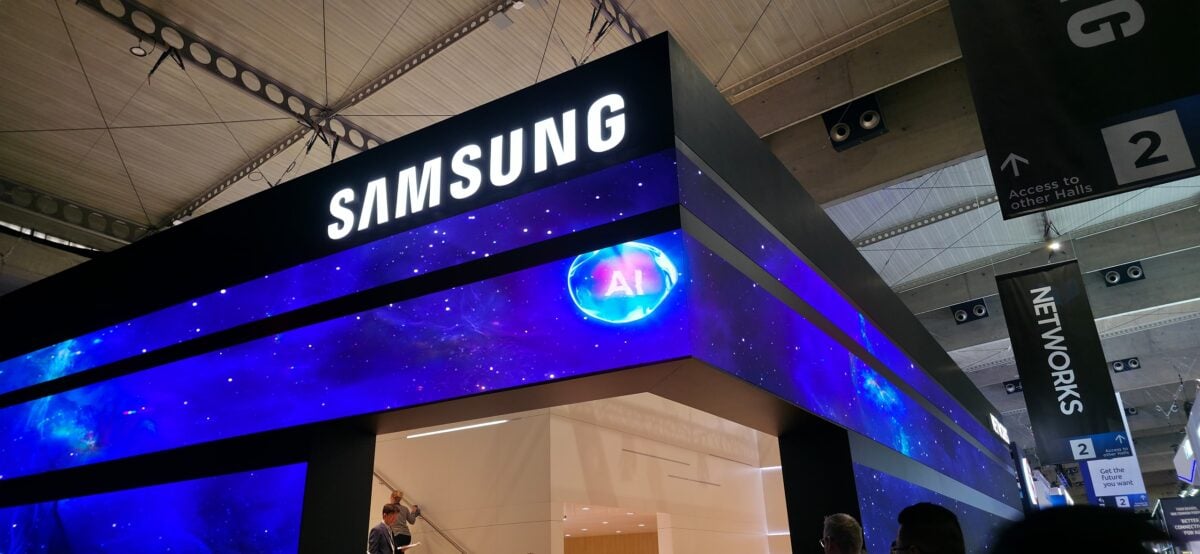
Semiconductor Chip Sales Fuel Historic Financial Growth
The primary catalyst behind this stellar financial performance was Samsung's Device Solutions division, which focuses on designing and manufacturing semiconductor chips. This powerhouse unit alone generated a staggering revenue of KRW 147.1 trillion (~$110.21 billion) and recorded an operating profit of KRW 106.5 trillion (~$79.79 billion). Much of this success stems from supplying advanced memory and storage solutions to global AI leaders such as AMD and Nvidia, while significantly scaling up production for HBM4 memory modules and high-capacity server SSDs designed for modern AI data centers.
Additionally, Samsung Foundry—the contract chip manufacturing arm serving fabless companies—projected double-digit revenue growth heading into the final quarter of 2026. The division is also gearing up to commence commercial chip manufacturing at its brand-new advanced fabrication facility in Taylor, Texas, by 2027. Meanwhile, the System LSI sub-division reported steady gains fueled by strong shipments of Exynos system-on-chip processors and ultra-high-resolution 200-megapixel camera sensors.
Smartphone and Consumer Electronics Face Cost Pressures
Despite the monumental triumph in semiconductors, Samsung's Mobile Experience (MX) division—encompassing smartphones and cellular network infrastructure—faced temporary hurdles. Posting a revenue of KRW 37.7 trillion (~$28.25 billion), the division suffered an operating loss of KRW 0.6 trillion (~$450 million) in Q3 2026 due to soaring memory component costs, even amidst steady global demand for premium mobile devices. However, leadership expects a robust rebound toward the end of the year, driven by the anticipated commercial rollout of the Galaxy S26 series and the innovative Galaxy Z Fold 8 series.
Similarly, the home appliances and TV divisions experienced minor contractions, logging an operating loss of KRW 0.2 trillion (~$150 million) as television sales tapered off following the conclusion of the 2026 FIFA World Cup. On a brighter note, Samsung Display performed admirably with KRW 8.0 trillion (~$5.99 billion) in revenue, supplying premium OLED panels for cutting-edge devices across the tech ecosystem.
What drove Samsung's record-breaking profit in Q3 2026?
The record-breaking profit was primarily driven by massive sales in the semiconductor division, particularly high-demand memory chips, HBM4 modules, and server SSDs supplied to AI infrastructure giants like Nvidia and AMD.
How much was Samsung's operating profit for the quarter?
Samsung announced an astonishing operating profit of KRW 107.4 trillion, which is approximately equivalent to $80.47 billion USD.
Did the smartphone division also record profits?
No, the smartphone division experienced an operating loss of KRW 0.6 trillion (~$450 million) during Q3 2026 primarily due to increasing memory chip manufacturing costs.
What are Samsung's investment plans for future chip production?
Samsung has allocated a massive portion of its KRW 84.4 trillion full-year capital expenditure—specifically KRW 76.8 trillion—directly into its semiconductor division to meet explosive market demand for artificial intelligence and high-performance computing hardware.
🔎 In conclusion, Samsung’s phenomenal financial triumph in the third quarter of 2026 underscores the immense market pivot toward artificial intelligence and advanced computing infrastructure. By successfully capitalizing on next-generation memory chip demands and strategic technological scaling, Samsung has cemented its dominant leadership in the global technology landscape, setting a high financial benchmark for competitors worldwide.
Post a Comment